(December 30th) This was the final stretch of our driving route and the last full day of driving..
Andres had given us some advice on this stretch: “
“Important when traveling from Torres del Paine to Calafate, or vice versa: Avoid in Argentina the ruta 7 (red color) which seems shorter, but is in very bad conditions and therefore, have to drive very slowly, so it will take more time and you will have high chances of a tire issue. I recommend you take the green road (Ruta 40) which is safer and faster. Also, fill in fuel tank in Esperanza city.”
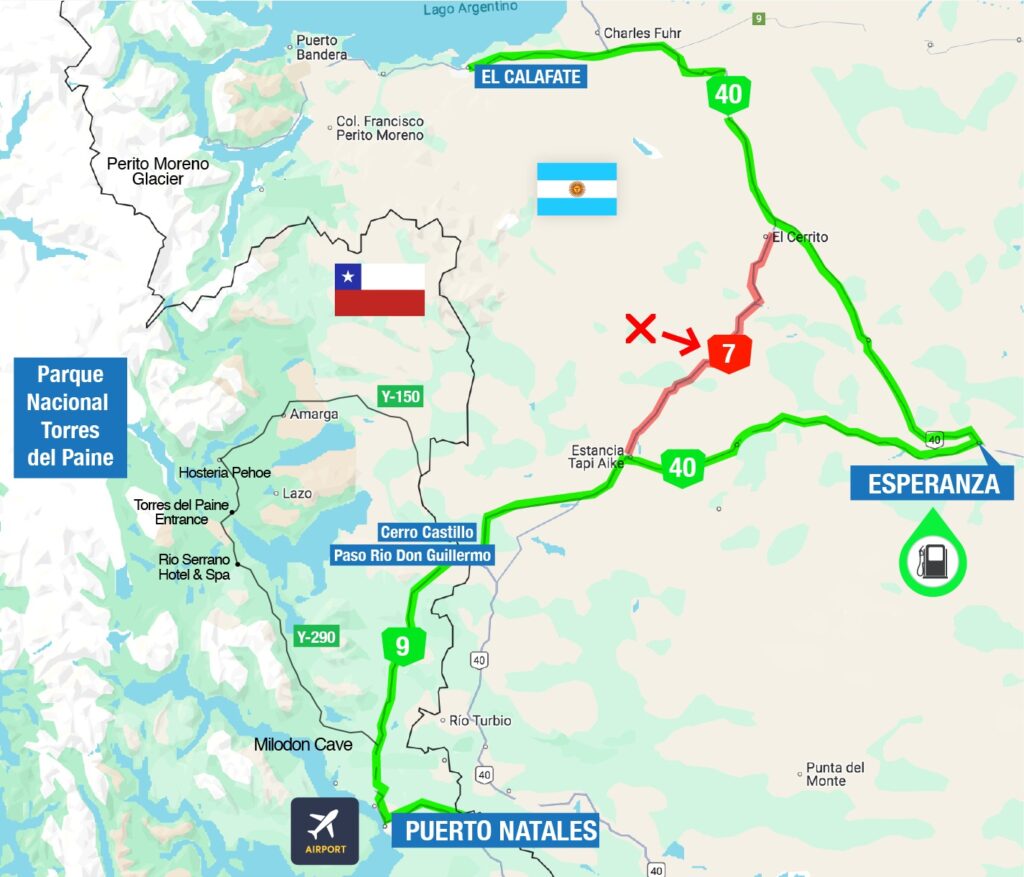
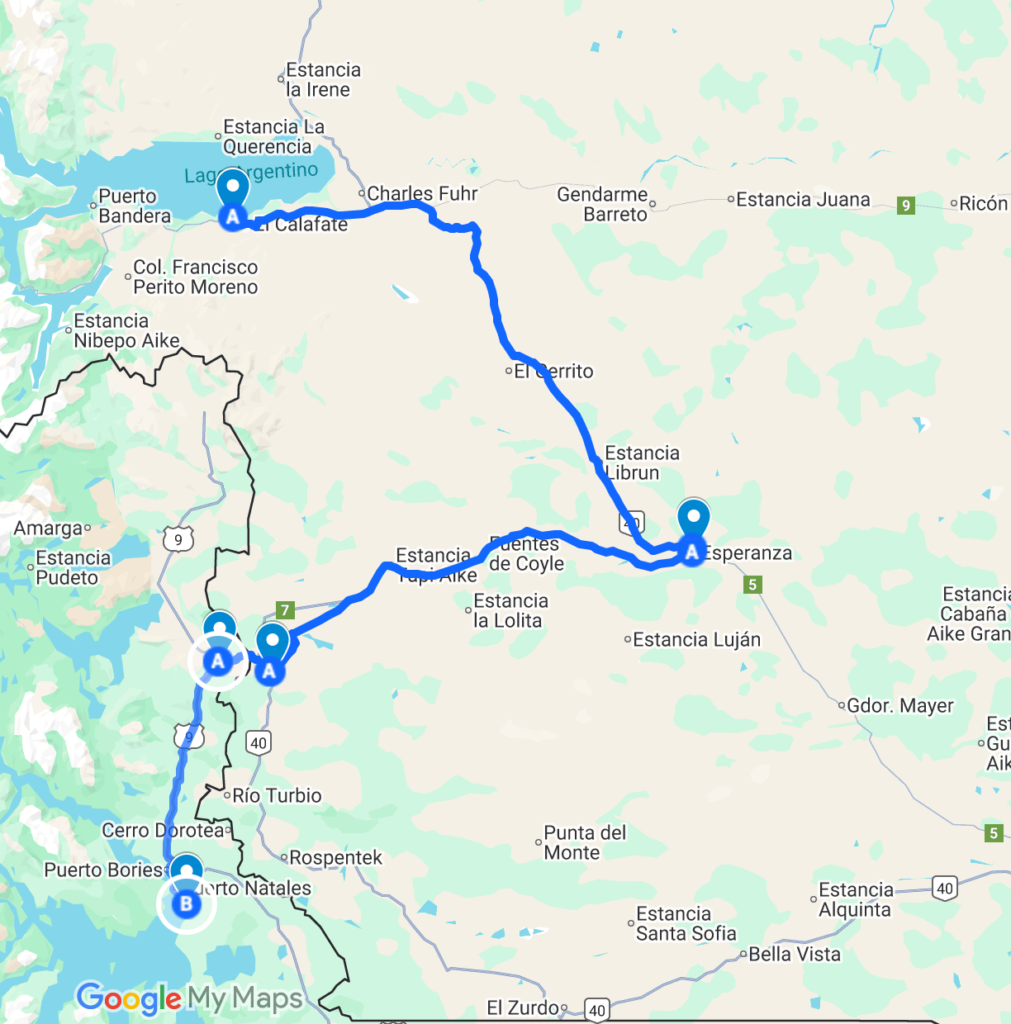
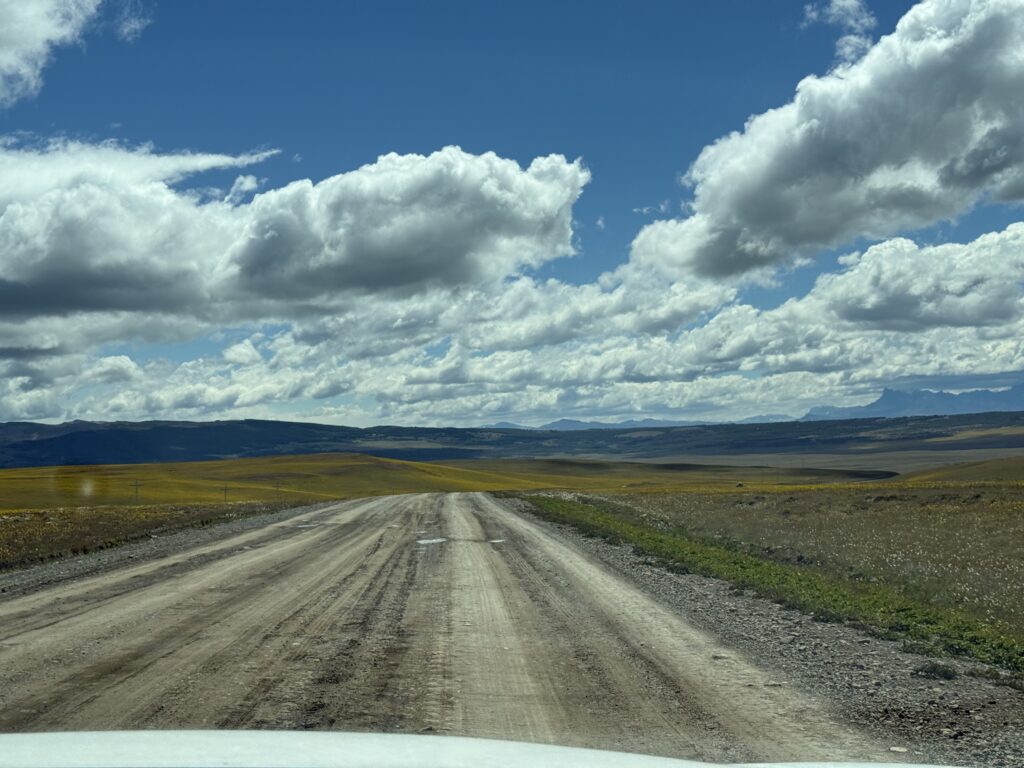
We had hence planned the route as below: Interestingly, we did not see (or missed) the sign for Ruta 7. However we followed his advice and went all the way to Esperanza before swinging back towards the Chilean border.
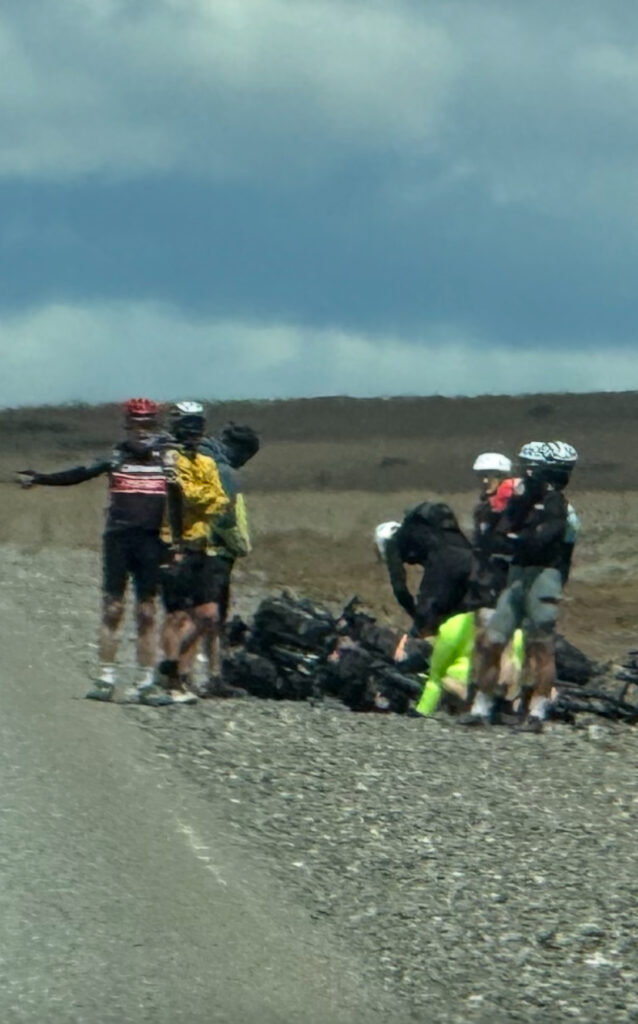
Along the way we were flagged down by a group of cyclists who had stopped by the road side They were battling the wind and wanted to know if we could give one cyclist and his cycle a lift as he was unable to continue due to a combination of wind and tiredness. Unfortunately we could not as we did not have space for another person and a cycle and in any case, we were heading for Chile. They however had already called for help which was on its way!
We marvelled at the grit, determination and stamina of these cyclists, travelling through such inhospitable terrain. While this was a larger group, during our journey , we had seen many much smaller and even solo cyclists, in the most remote of places.
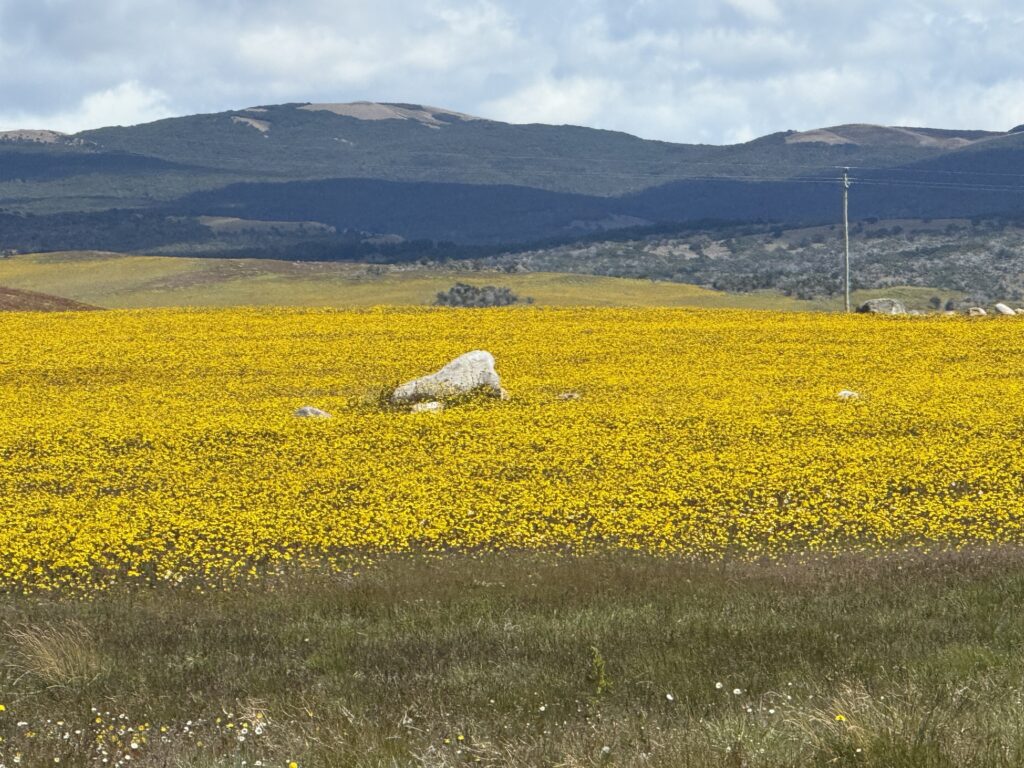
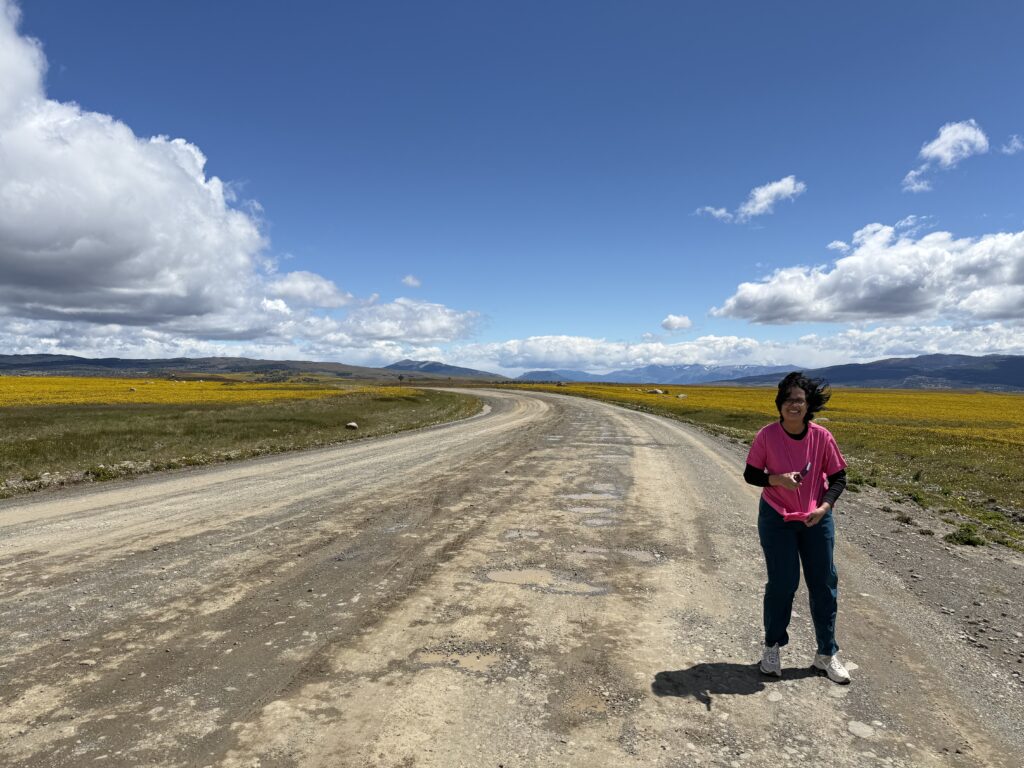
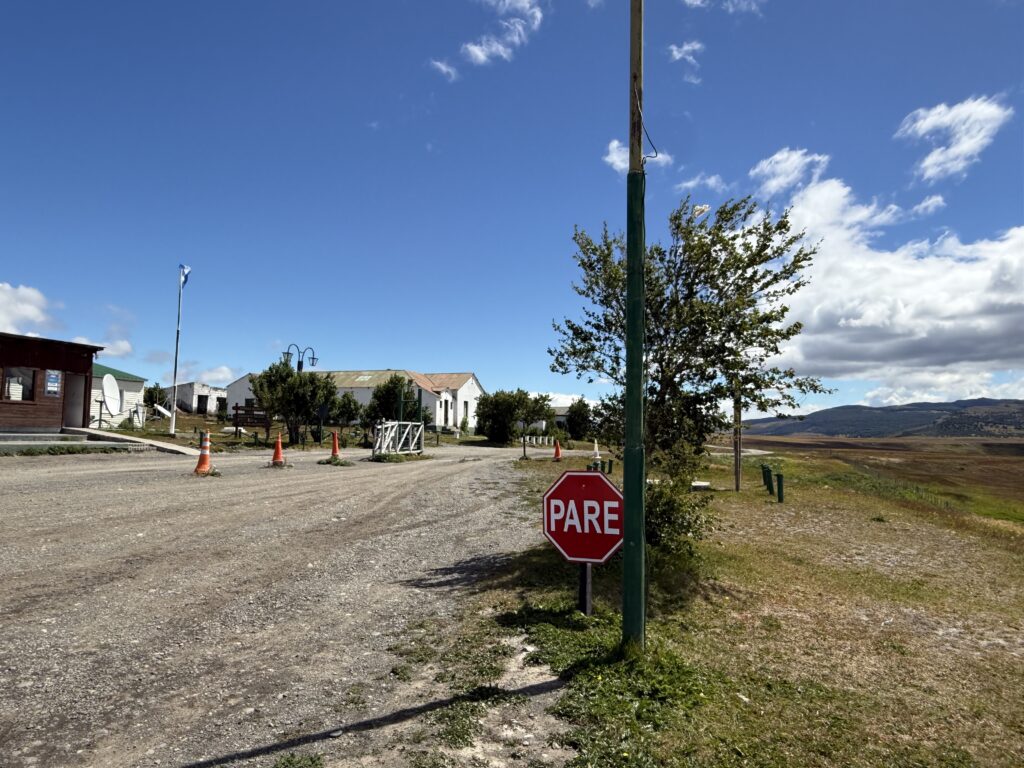
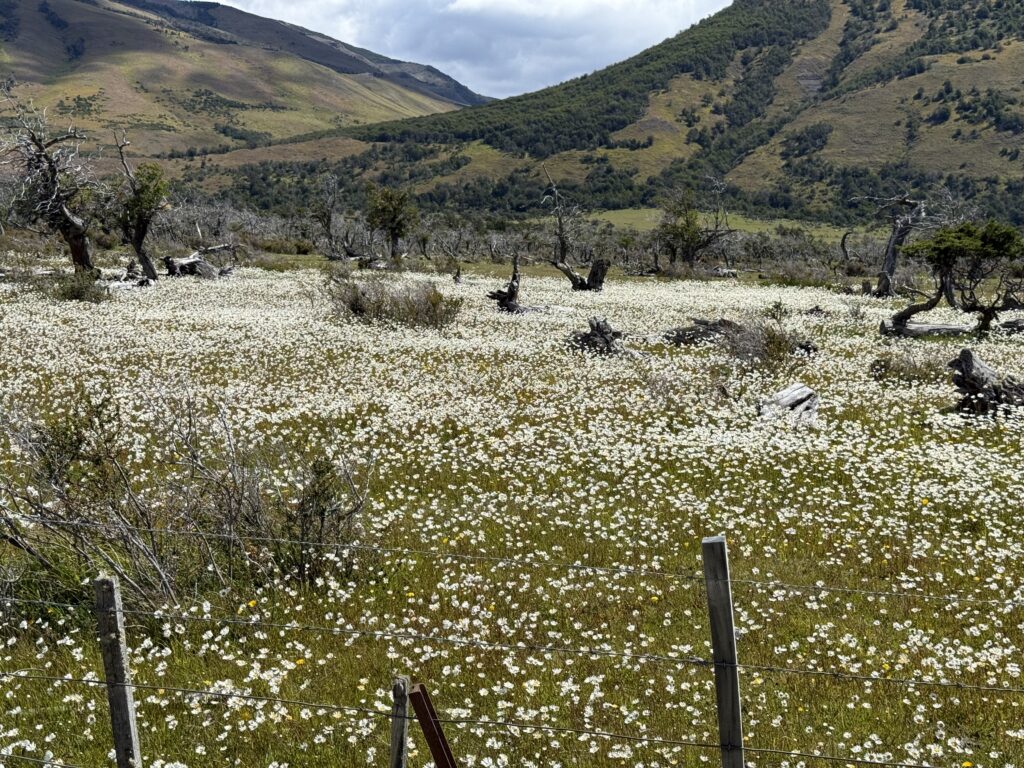
After border formalities , we crossed into Chile where the Ruta 30 becomes the Y 205 and leads to the Chilean Immigration and Customs checkpoint at Cerro Castillo. I thought there were approximately 15km of “no-mans” territory between the border posts… however presumably there is a definite well defined border line. What was striking about the region was the colourful fields along this stretch of the drive. (Covered by Sheila below).
It was with a bit of relief that we reentered Chile. One of the stipulations for the car rental and entry into Argentina was that if vehicle recovery was required in Argentina, we had to arrange and pay for the recovery ourselves, whereas we were fully covered for all eventualities in Chile.
In Chile, the Ruta 30 becomes the Y 205, which is an excellent tarmac road, and from there onwards all the way to Puerto Natales.
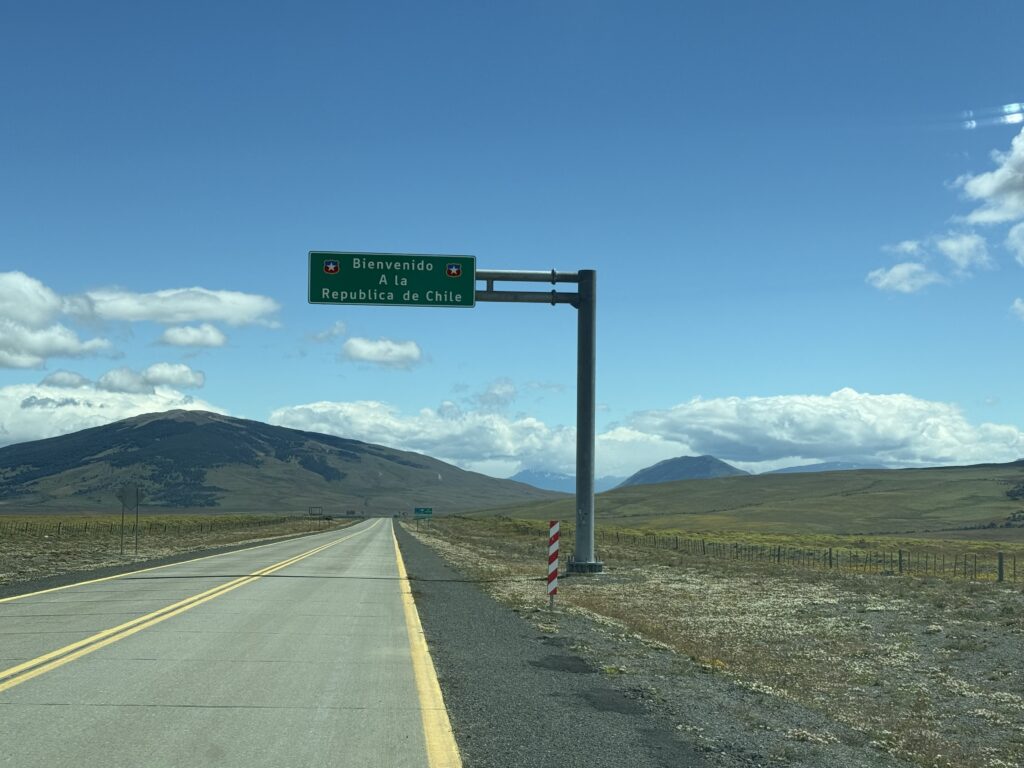
From the entry into Chile, there is about 10 km before the Chilean Immigration and Customs at Cerro Castillo. The immigration procedure was straightforward. The Customs Officer gave us a declaration form to complete. Then he wanted to inspect the car. He opened the back door had a cursory look around and waved us on..
He looked up at the sky, pointed to a circling bird and said “Condor” .. It was too distant to clearly make out it’s features.
We reached Puerto Natales (PN), the end of the road for us at 4pm. It is a port city in Southern Patagonia, and the gateway to the Torres del Paine National Park. It was also the port from where we would be embarking on the ferry for the return trip to Puerto Montt.
We found it a very pleasant sleepy town with numerous restaurants and travellers either starting or ending their Patagonian adventures.
Our Hotel the HD Natales was situated about 5 km from the centre of Puerto Natales in Puerto Bories. We had initially booked a self catering apartment in PN for 3 days however, a day after the reservation, there was an issue with the booking. We then cancelled that and one of the only places with availability was HD Natales. As events would demonstrate in the next couple of days, it was serendipitous….
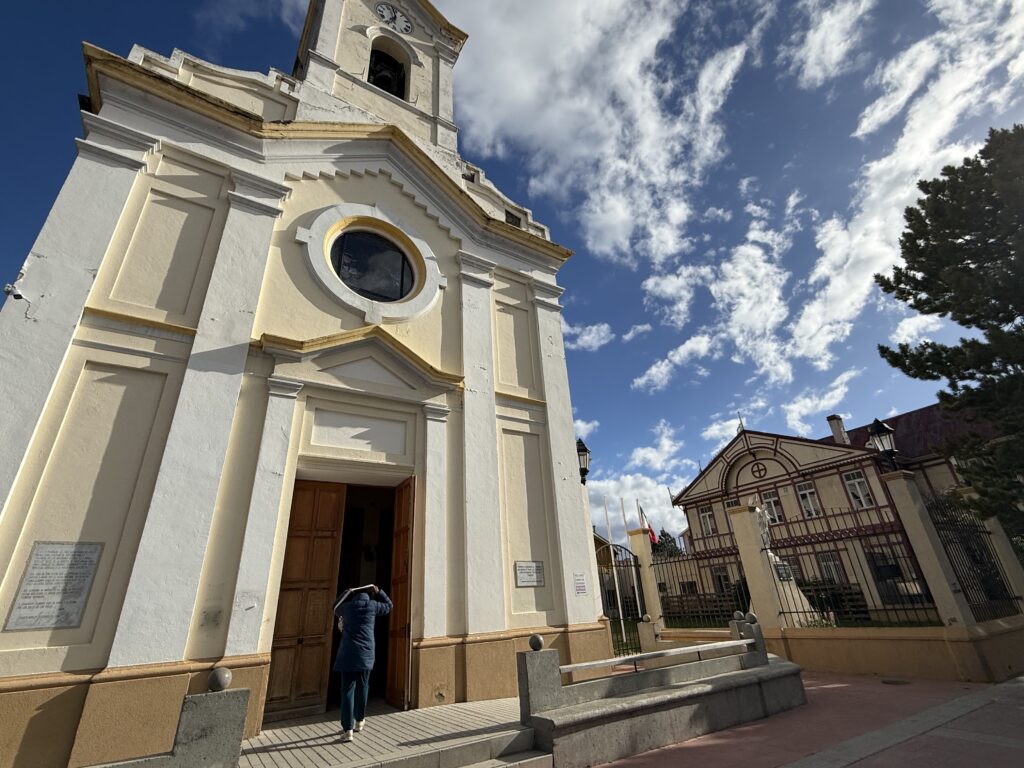
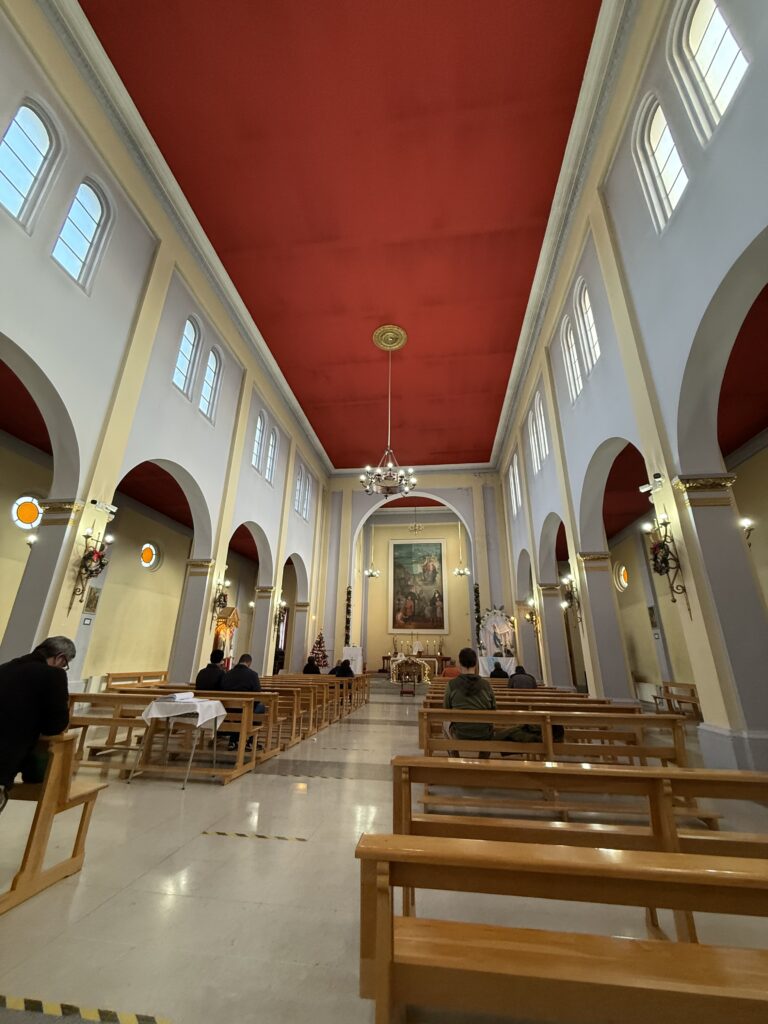
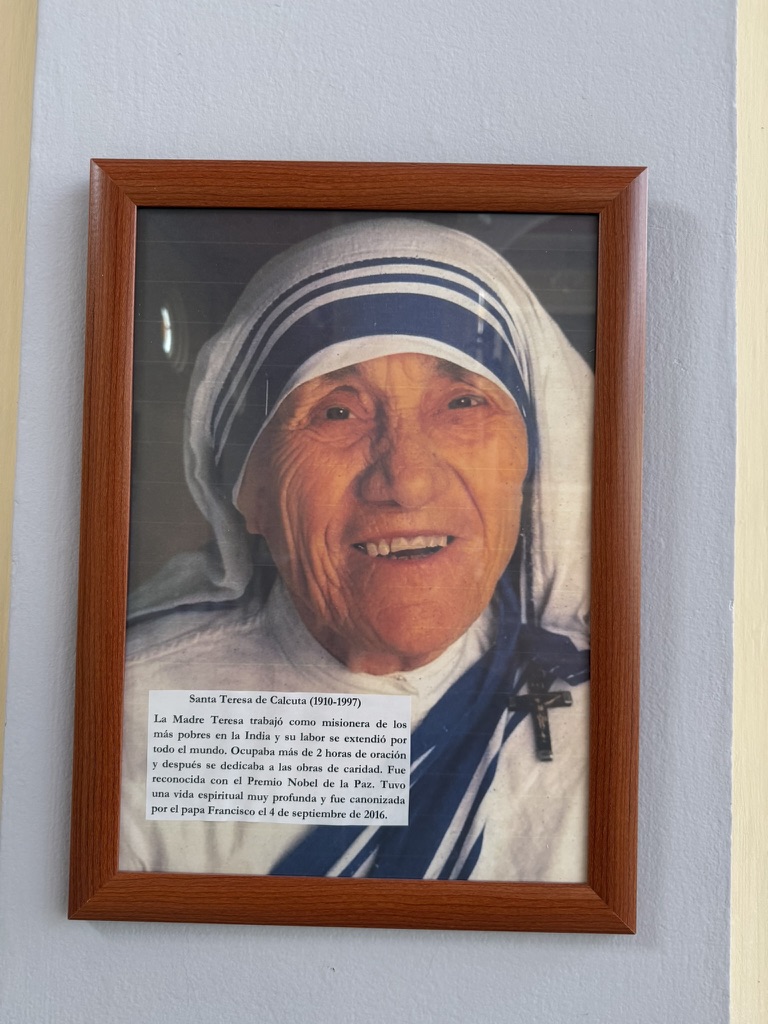
After checking in to our room we drove to town, parked and walked around and attended the 7 pm mass at the Parroquia Maria Auxiliadora Del Carmen Catholic Church next to the Plaza de Armas Arturo Prat. We felt it was auspicious to end the drive with mass.
Parroquia Maria Auxiliadora Del Carmen Catholic Church
Sheila’s take:
For me the drive from El Calafate to Puerta Natales was filled with colour and wind.
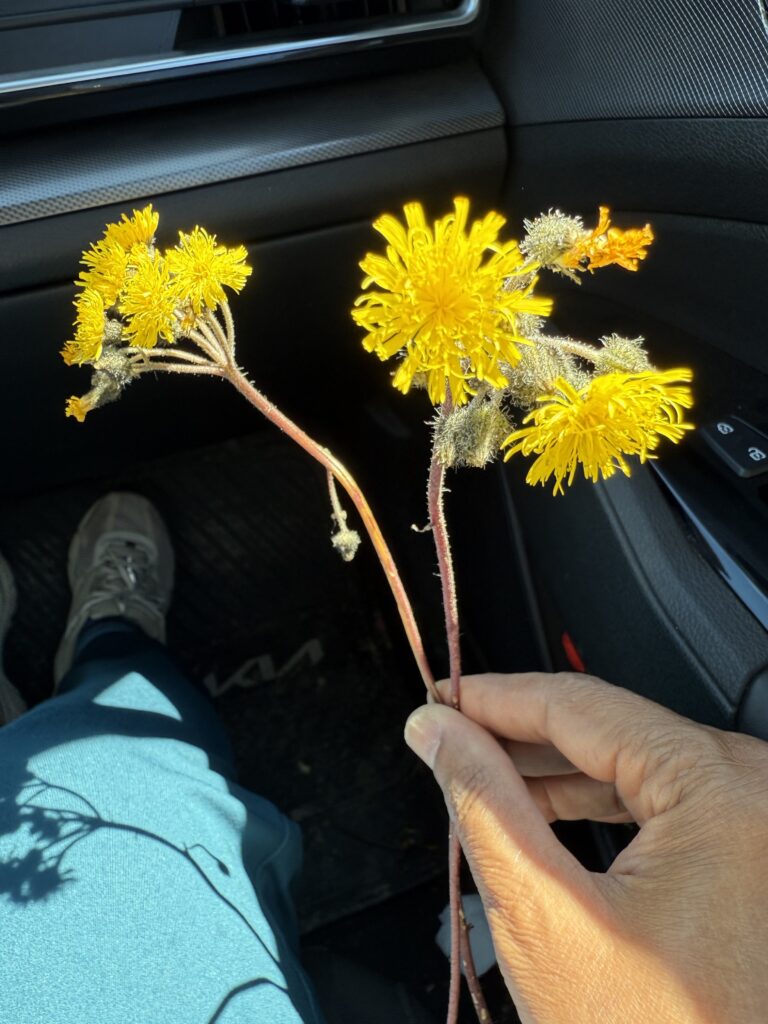
There was one section of the drive where the entire landscape stretching to the horizon was covered in a carpet of yellow flowers. These flowers are called Cat’s ear flowers. These flowers are similar to dandelions but the difference is in that they have a solid main stem and can be branched with two/ three flowers arising from the main stem.They are more hardy and drought and heat resistant compared to dandelions and hence survive on the Pampas in Argentina. Furthermore they are less edible for the cattle compared to dandelions hence the reason for the uninterrupted ecstatic spread!!
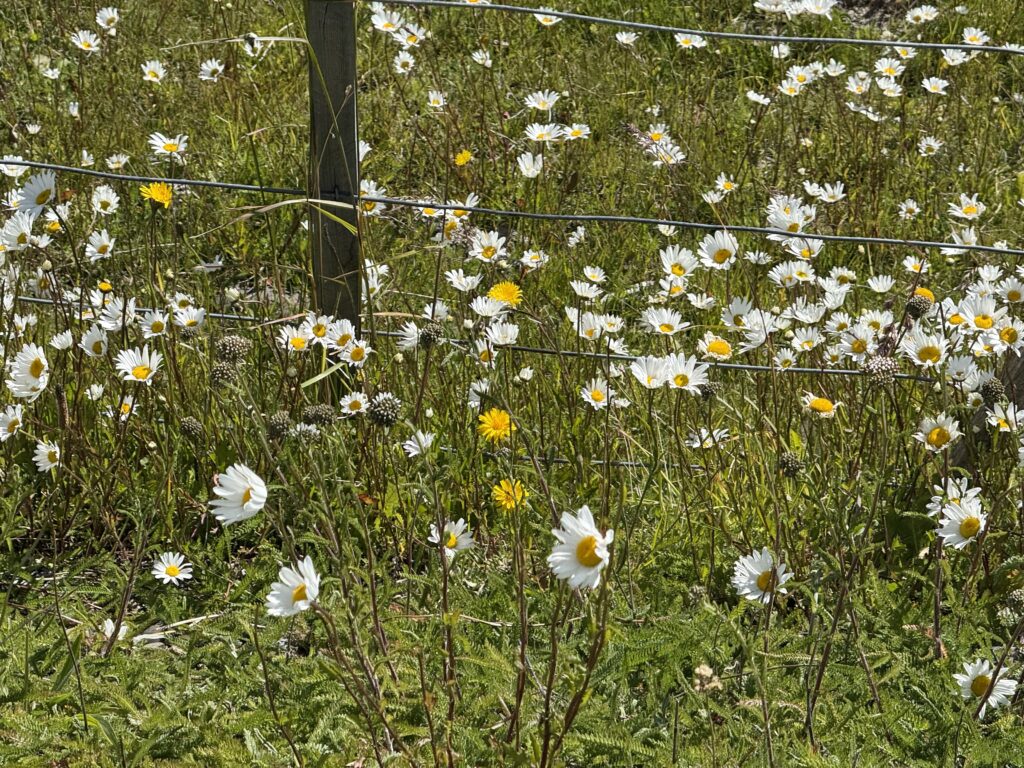
The other flowers we saw covering fields were the ox eye daisies. If only William Wordsworth was around … Ah the beauty of it……. a poem just seemed to hang in the air waiting to be captured!
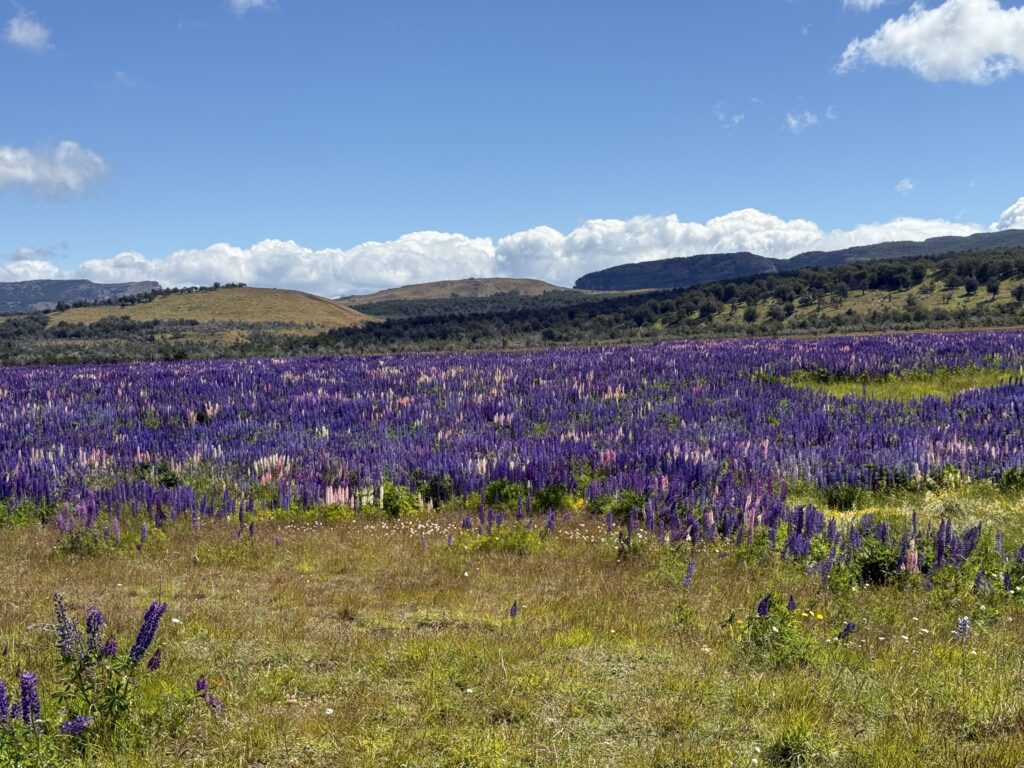
Lupins started making their appearance again as we crossed into Chile. We were told by one of the tour guides that lupins were introduced into Chile by ….. you guessed right -the English creating cottage garden and the lupins, like the sheep have definitely thrived.
There were also fields covered in red from the red sorrel.
My heart was so filled, as I love colour and there was an over abundance of it on the drive.
For Siddharth:
Leave a Reply