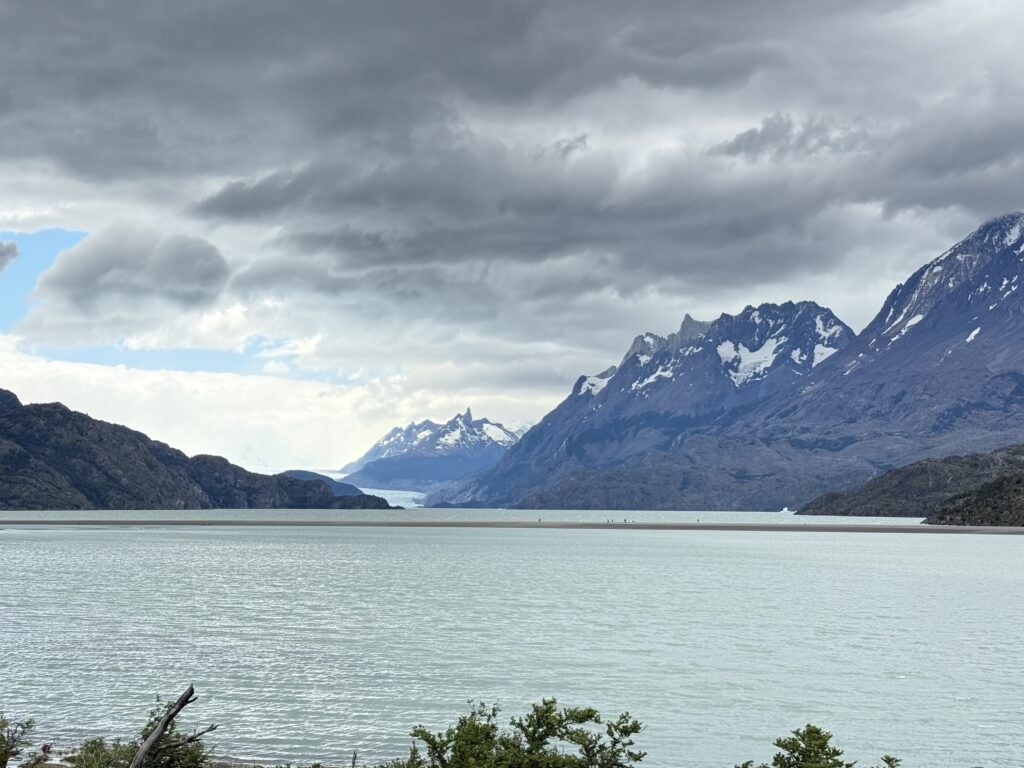
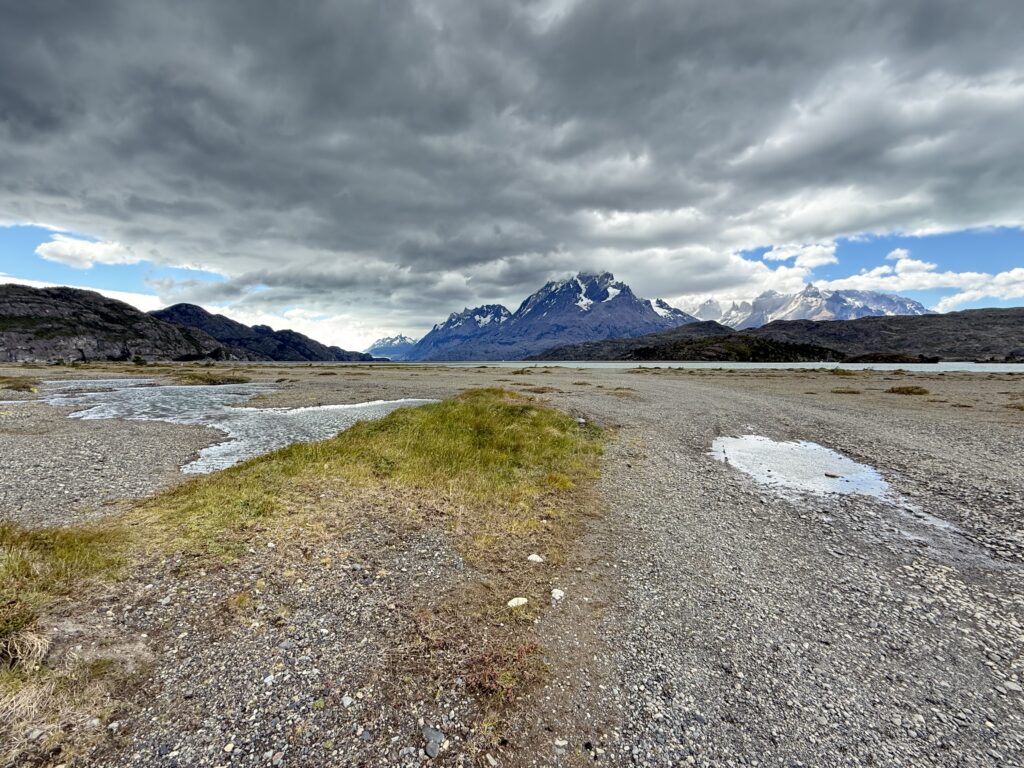
(31/12/2025). Otherwise known as “Towers of Paine” derives it’s name form the three dramatic granite peaks which tower in the Southern Chilean Patagonia National Park along with the Cuernos del Paine (Horns of Paine). It is a UNESCO Biosphere Reserve, with turquoise lakes and glaciers and trekking routes.
Our whole Patagonian adventure had started off with a plan to trek the “O” trail in Patagonia. However we realised it was a physically demanding treat meant for fit individuals with experience in trekking tough terrain.
As we had only a couple of days, we did a guided day trip of the Torres National park with Top Tours which picked us up from our hotel at 7.45 am. We were the last to be picked up in a group of 14.
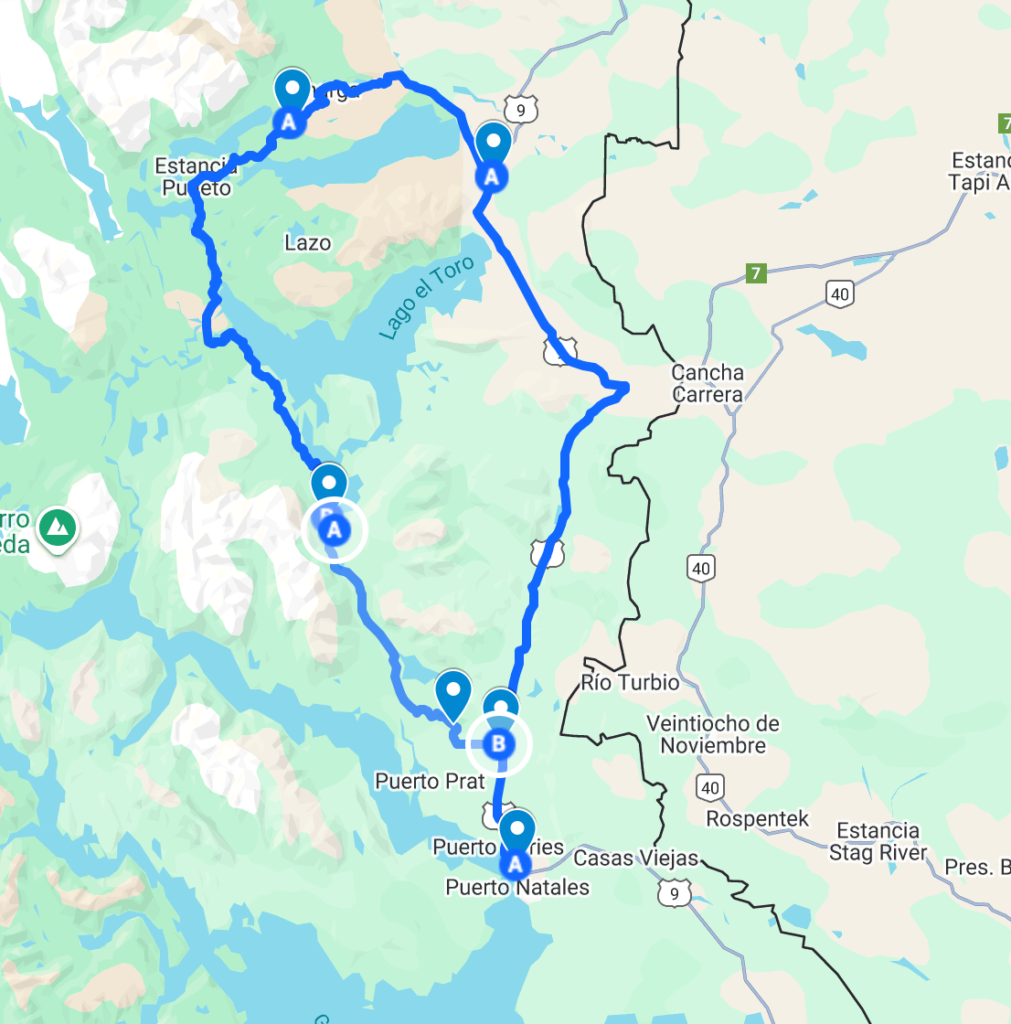
We drove north along Ruta 9 to Cerro Castillo where we had crossed to the previous day from Argentina and then further north to connect to the Y150 heading to Torres National park.
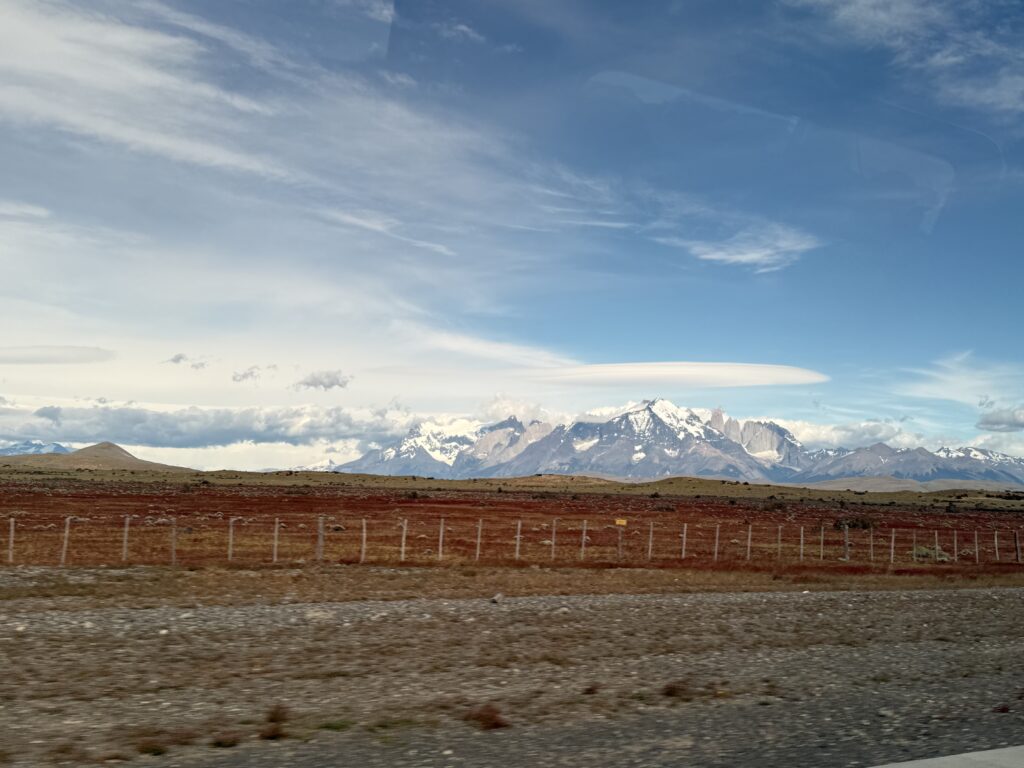
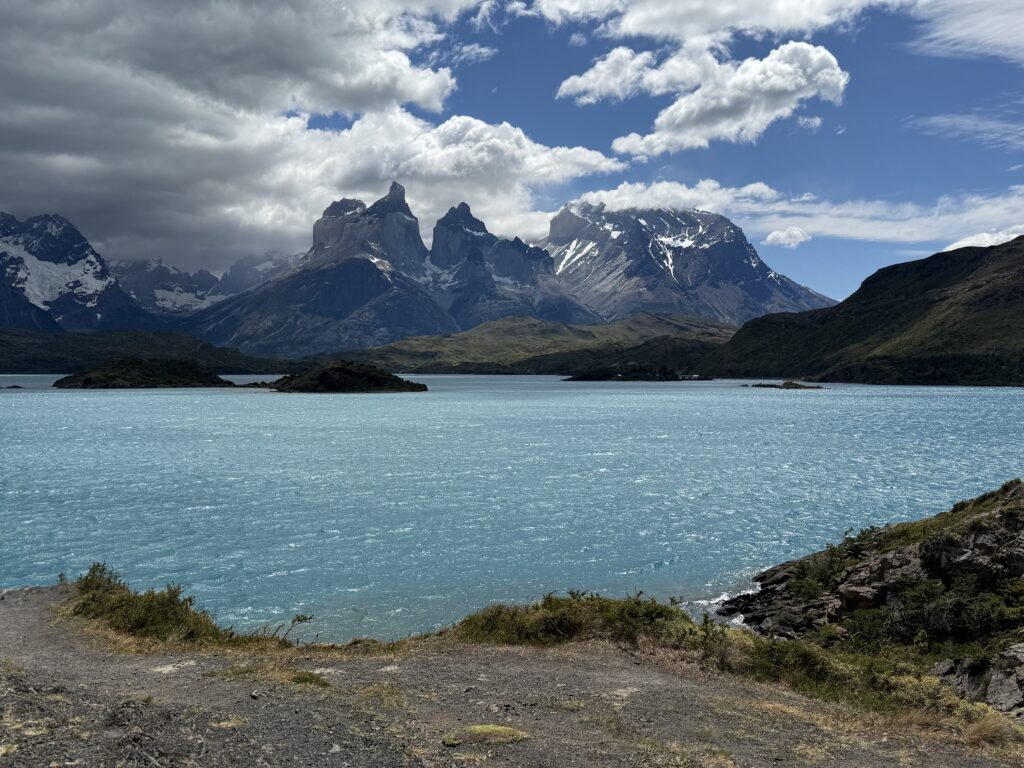
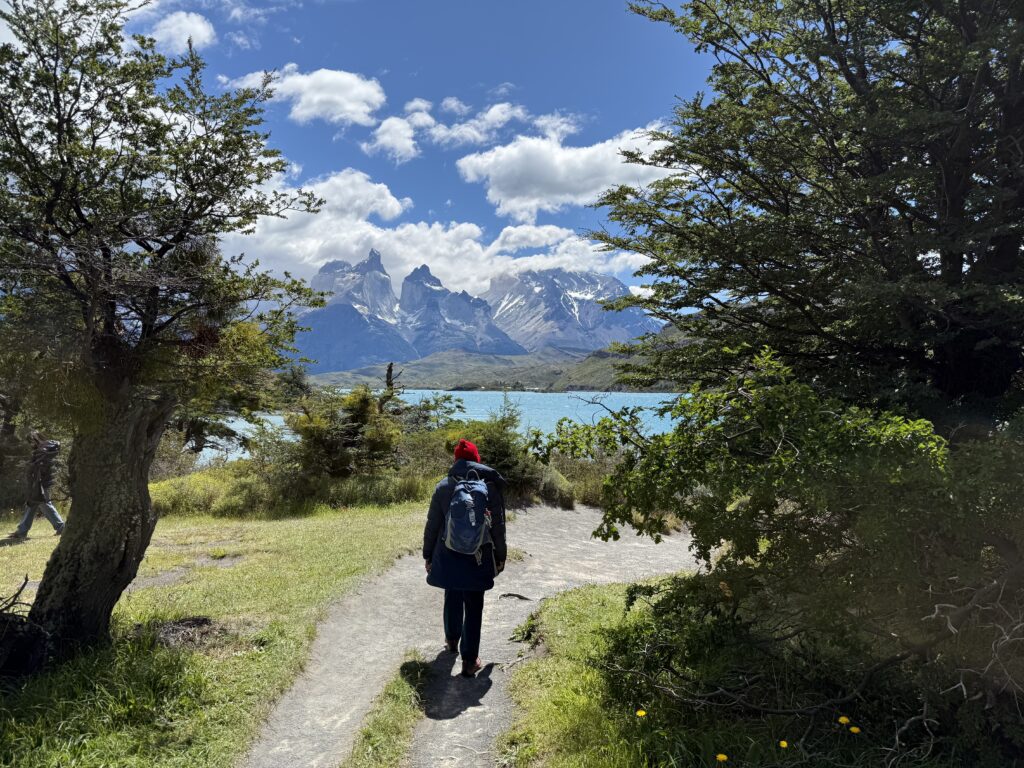
The spectacular Paine towers
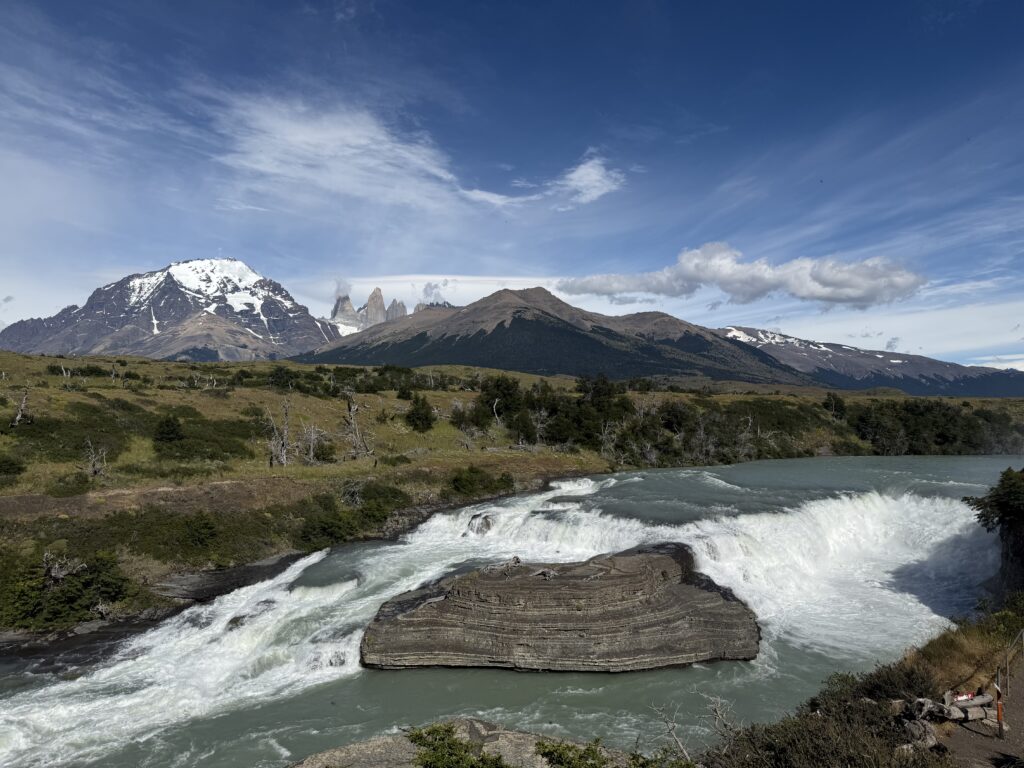
Before entering the Park there was a short deviation to the Cascade Rio Paine (The Paine River Waterfall)
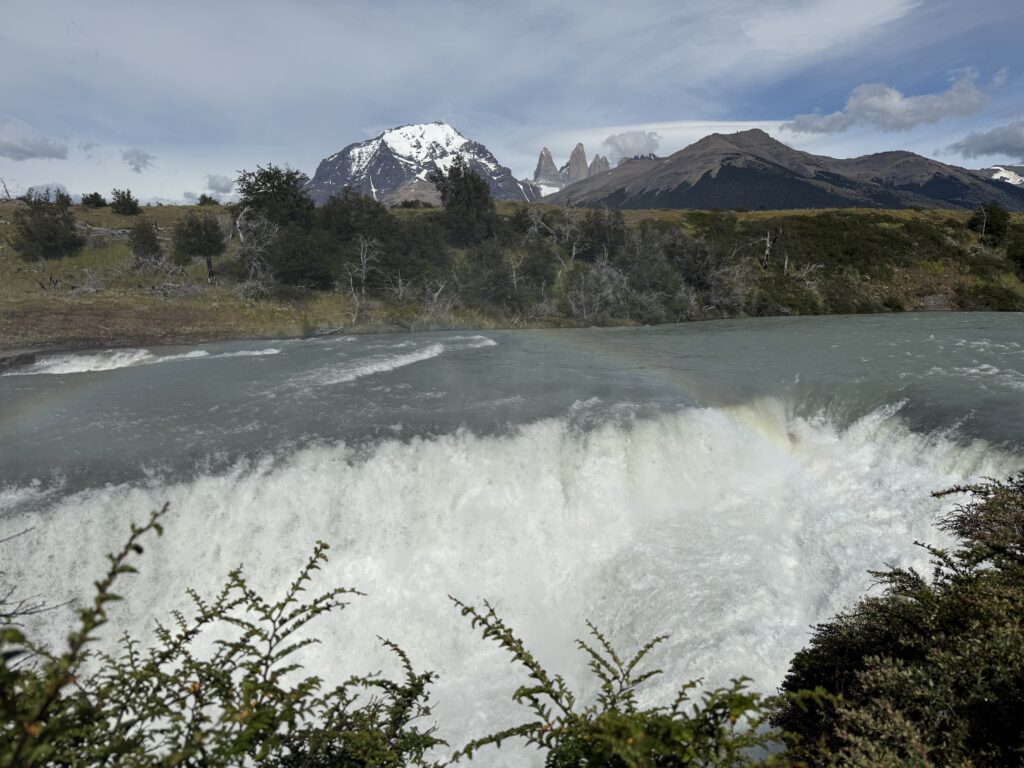
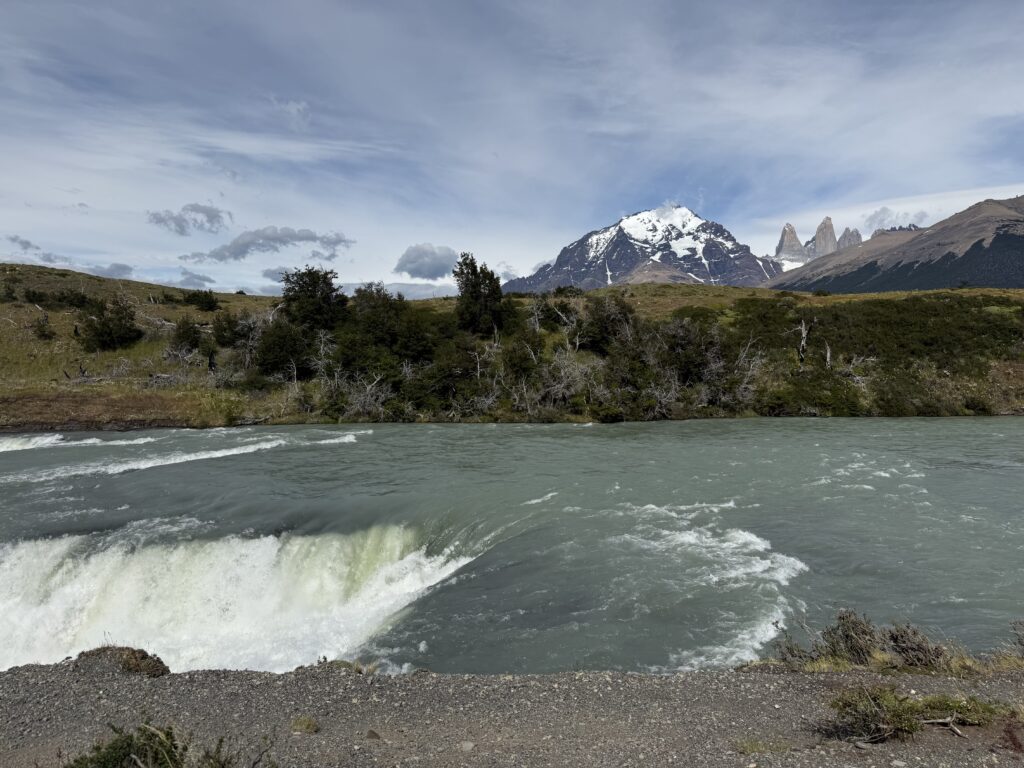
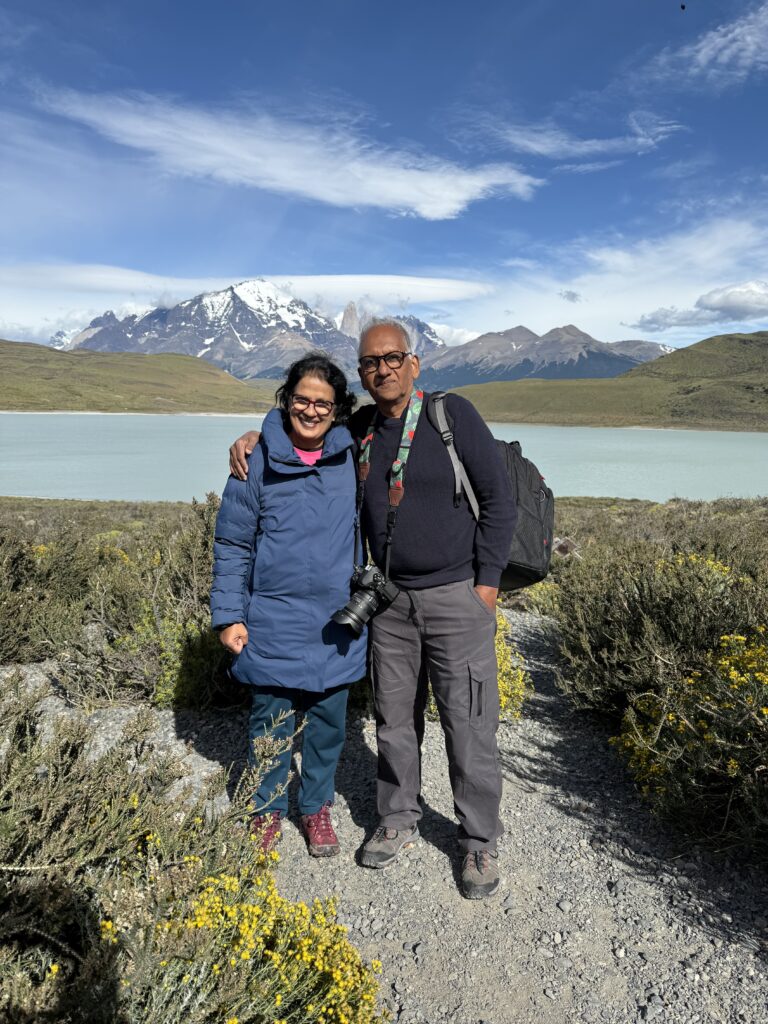
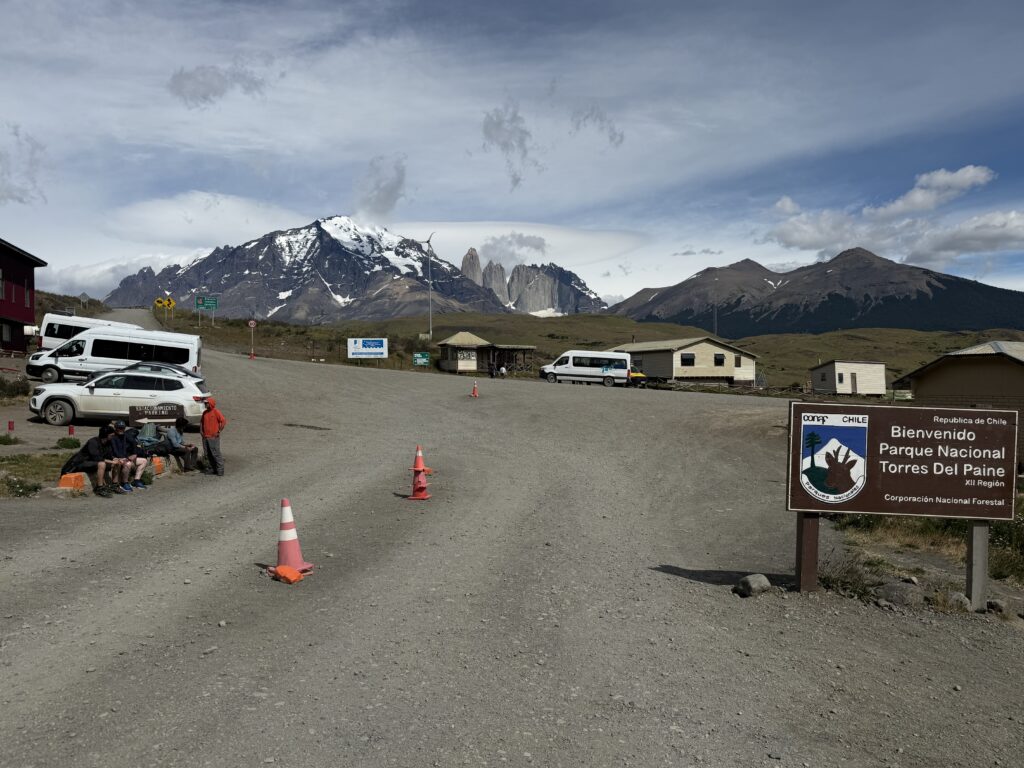
The entrance to the National Park, where all visitors have to register before entering the park. This is also the starting points of the O and W treks.
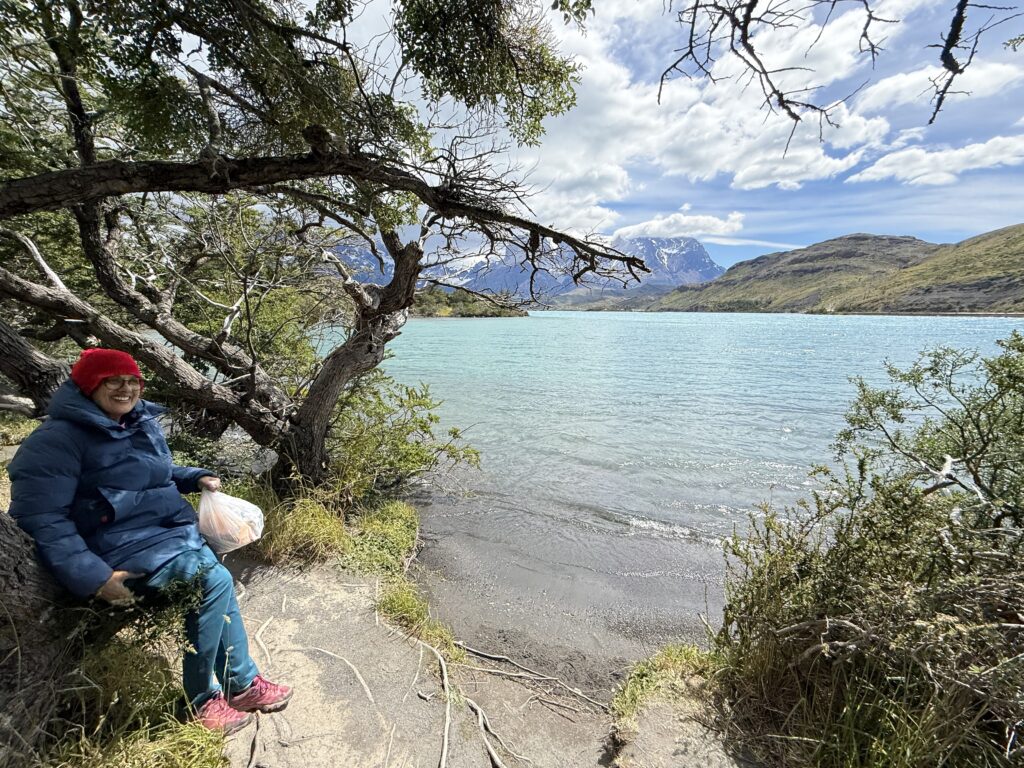
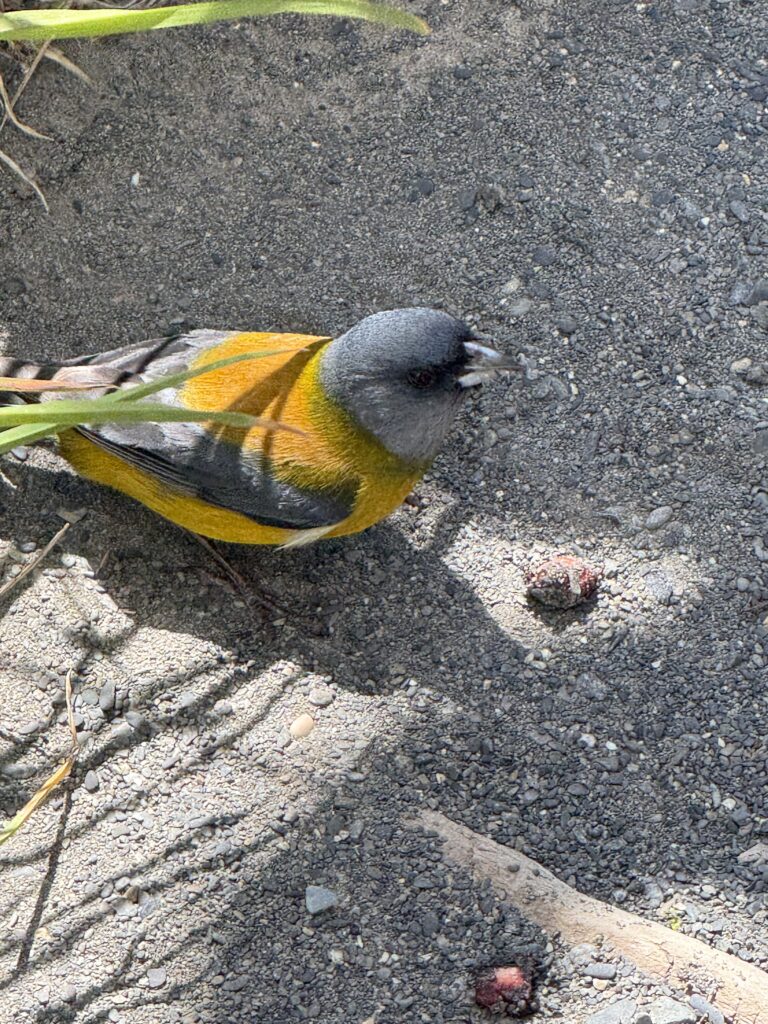
A Grey Hooded Sierra Finch who joined us for lunch, by the lake side Lago Pekoe.
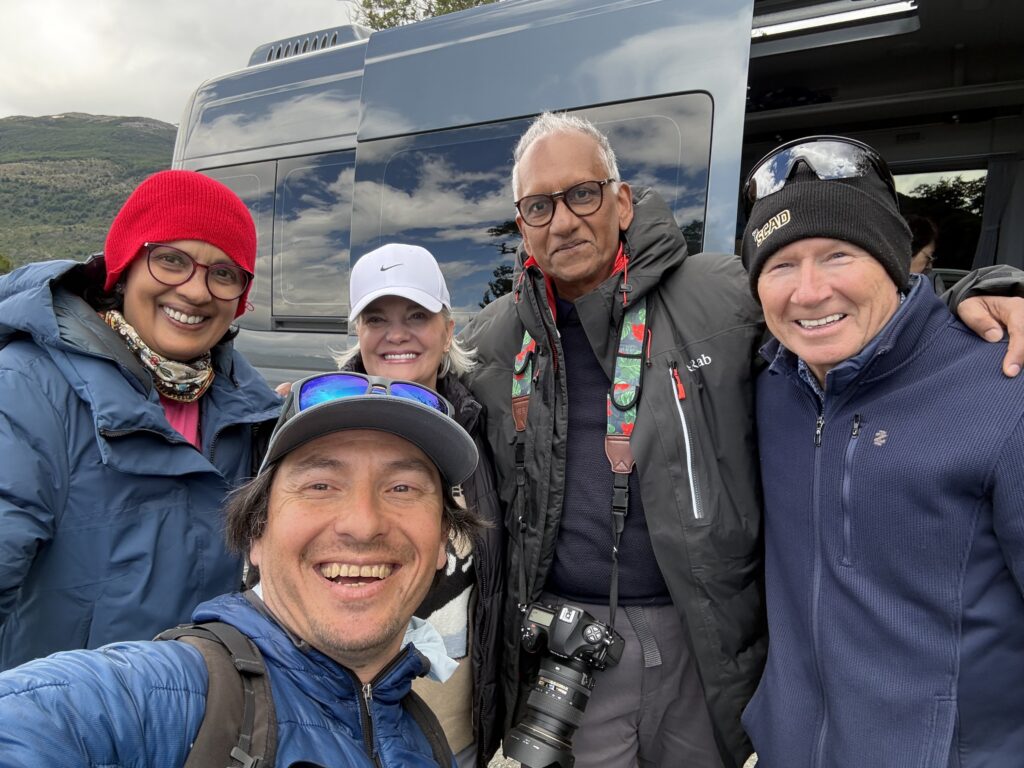
With Gonzalo the guide and Kim and Anthony from Dalton in Georgia USA. Anthony gave us an interesting background to Dalton, which is known as the “The Carpet Capital of the World”, and known for its massive carpet and rug manufacturing industry, producing a significant portion of the world’s floor coverings. It all began with Catherine Evans Whitener, making bedspreads by hand. With the demand for bedspreads, came advancements in mechanical tufting and transformation of the textile sector leading to carpet production.
Anthony and Kim were travelling in Patagonia before going off to Antartica. At the end of the day when we parted ways, he smiled, shook hands and drawled ” See you on the ‘other’ side one day!!”
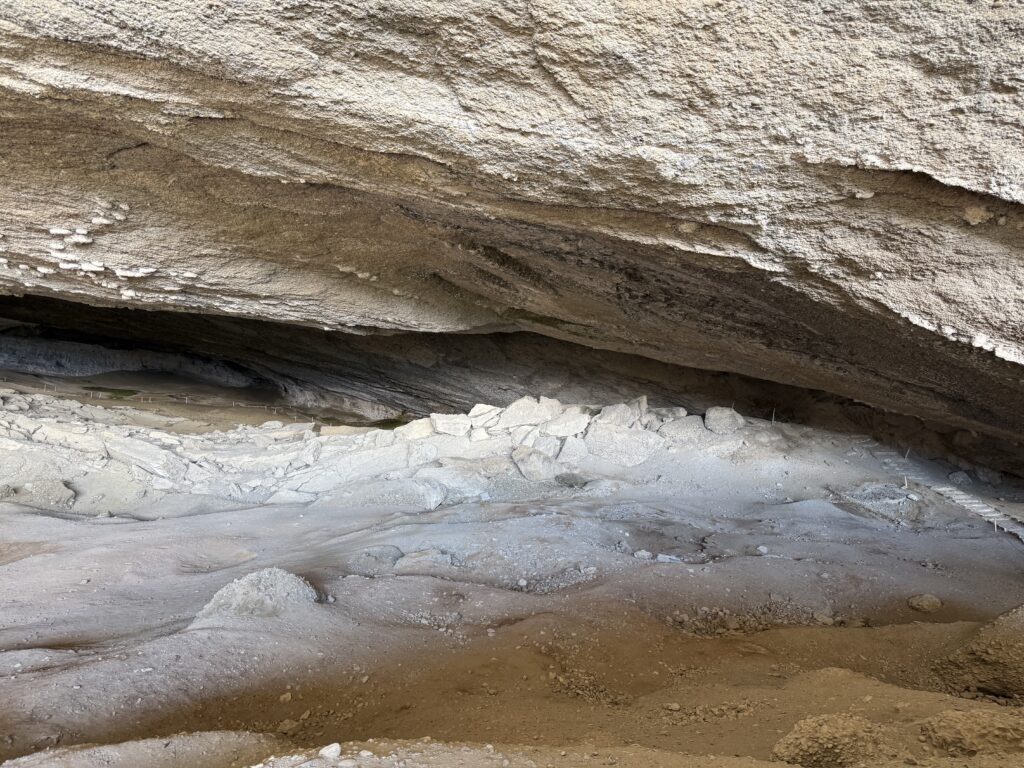
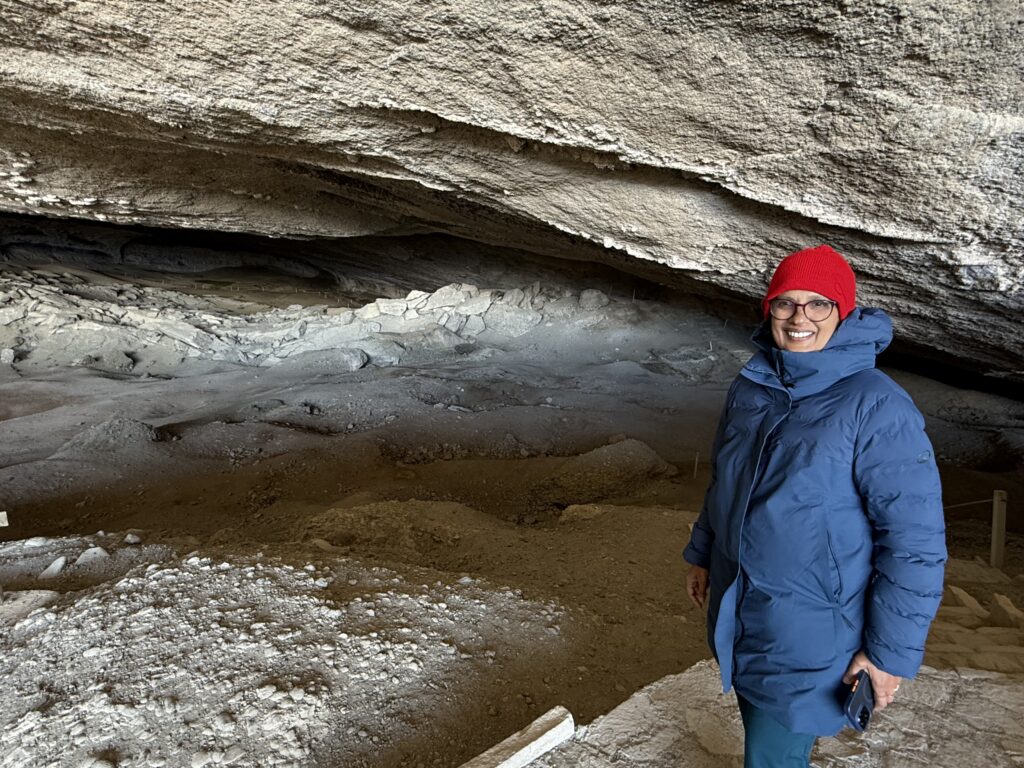
The Milodon Caves
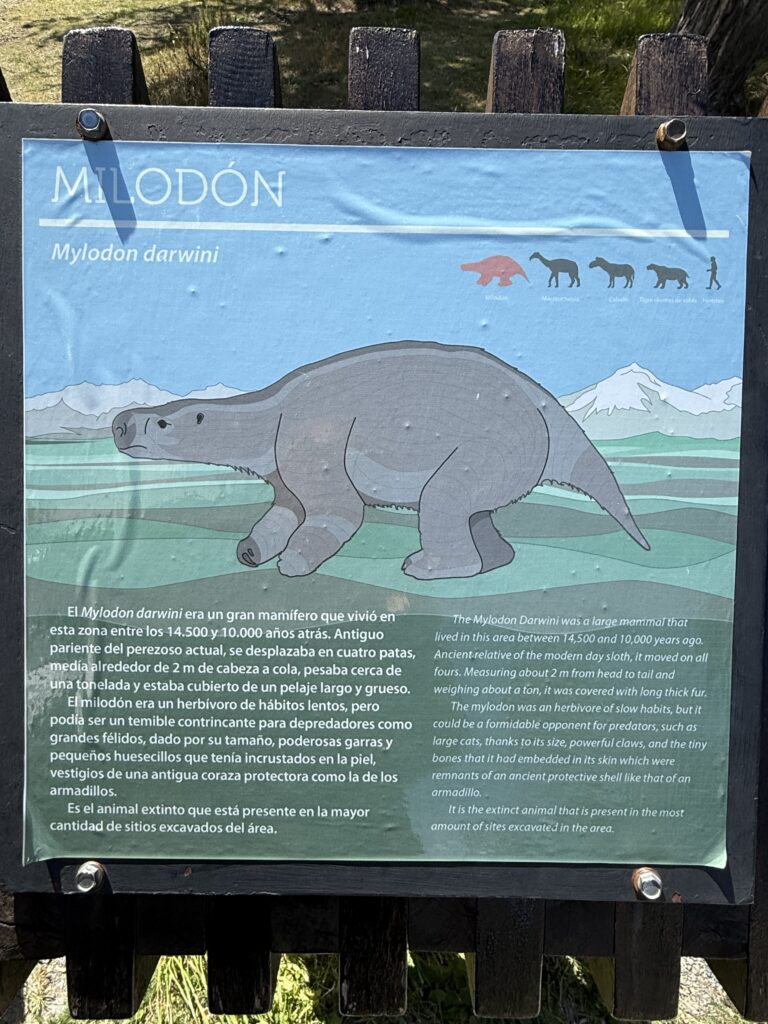
The caves get its names from the Mylodon Darwini (A type of extinct giant sloth named in honour of Charles Darwin).
Darwin’s name keeps coming up regularly in Patagonia at different places. His time in Patagonia (1832-1834) was instrumental in him developing the theory of evolution. He explored the vast landscapes and discovered extinct fossils. It is said he was captivated by Patagonia’s stark beauty.
Although he travelled to Patagonia on the Beagle, he travelled long distances in Patagonia by horseback and by foot as he was prone to seasickness!
Sheila take:
Our tour guide for the Torres Del Paine tour was Gonzalo who was very articulate explaining the geology of the rock formation and the vegetation around. He was also very passionate almost poetic as he spoke about the land and the indigenous people. There were many tribes in Chile and Argentina of which the ones he mentioned were the Mapuche and the Quechua. They had their own culture and traditions. They lived in harmony with the land. With the invasion of the land by the Spanish in the 1500s the indigenous people were killed, suppressed and died from diseases to which they had no immunity. Later after Argentinas independence came the English as traders who became powerful economically. They developed the sheep farming and a lot of meat was sent to feed the allies during the world wars. The forests and trees were burnt down to create more grasslands.The Germans and the Italians also became settlers particularly after the Second World War.
Gonzalo was saying how when the westerners came they started building fences and claiming the land for themselves. The indigenous people did not understand the concept of fences and they would jump over them as they went their way. They were shot and killed to teach them a lesson!!
Interestingly even though Argentina is so wild and people are non existent any where for miles and miles yet almost all the land has fences running over them. The guanacos are the wild animals found in these region. As they jump over the fence sometimes their body gets caught and tangled in the fence and they become easy prey for the pumas which are the other wild animals in this region.
In Chile a lot of land was owned by Douglas Tompkins which he returned to the Chilean Government to convert into national parks. Not only did he do that but he also removed all the fences that had been built around the land. The Pumalin Douglas National Park was named after him.
So in the midst of the wild beauty of Torres del Paine there is also the painful and all too familiar history of what the westerners did to the indigenous people and the land.
Moving on to the present day and something very palatable….
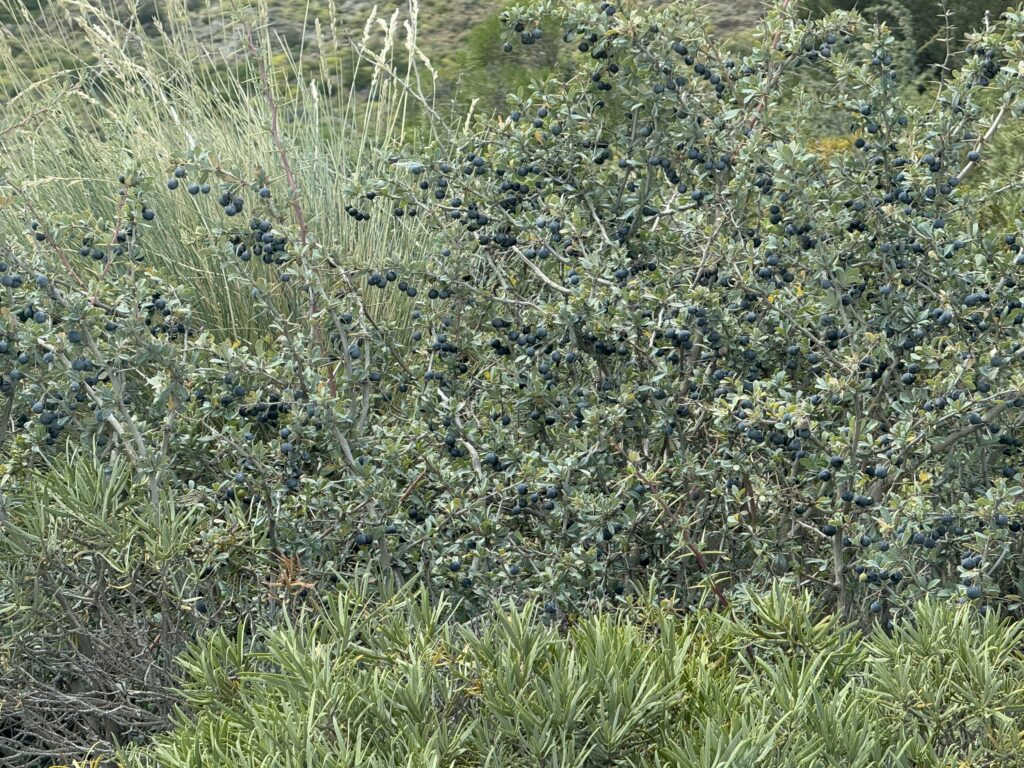
There is a well known drink in Chile called the Calafate Sour. It is made from a berry which looks like blue berries growing on a thorny bush. Gonzalo showed us these bushes and told us that these bushes thrived wherever there was a fire. The ashes from the fire allowed the seeds lying dormant in the soil to germinate!
We had many Calafate Sours on our trip! Highly recommended!
Jorge the Hotel manager was at the reception when we returned from the Torres tour. “Would you like to join us for New Years Eve Dinner” he asked. “It is not anything big, but just a small group bringing in the New Year. We will start around 9.30”.
“We would love to join!”
Leave a Reply