2nd January
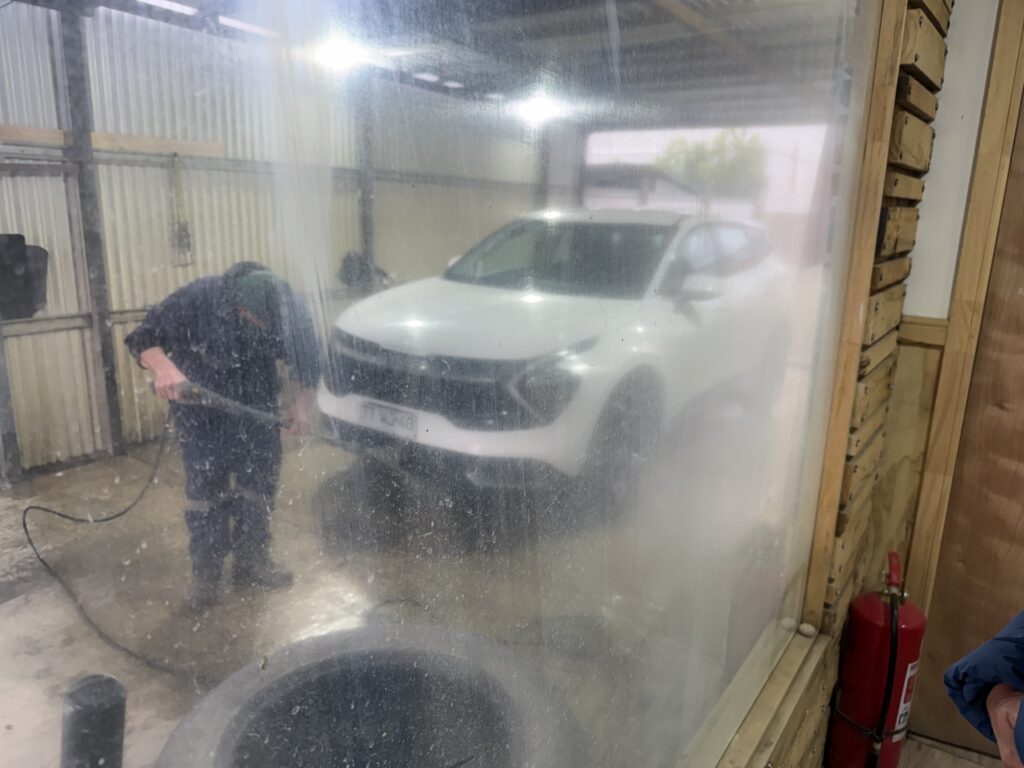
After breakfast, we drove to Lavados de autos De Agostini at the periphery of town for a car wash and valet. After the long drive, the car was quite dirty and dusty, inside and outside. Luis at the Lavados did a stellar job, jet washing the dust and grime off and a proper internal valet till the Sportage gleamed like new.
Pleased with the clean car we returned to our hotel and spent the rest of the morning repacking our bags. We rearranged our stuff and into one bag kept everything we would need for the three days in the ferry. The other bags would be kept in the vehicle and we would not be able to access the car during the trip. We checked out after 1 pm.
Jorge the manager was there at checkout. ” Have a smooth ferry trip” he said! “I have looked at the weather and the sailing should be smooth. You know sometimes it can be rough with very large waves! ” Over the last three days Jorge had become quite friendly. Managing the HD was his secondary job. His main responsibility was as manager of a luxury hotel in Santiago, during the week. He owns the HD hotel which he bought a few years ago and spends weekends supervising the small team of young staff who manage the hotel. He gave us his card and said..”If you ever do come back to Patagonia or are in Santiago, give me a call! Give me a call if you do need anything at all.”
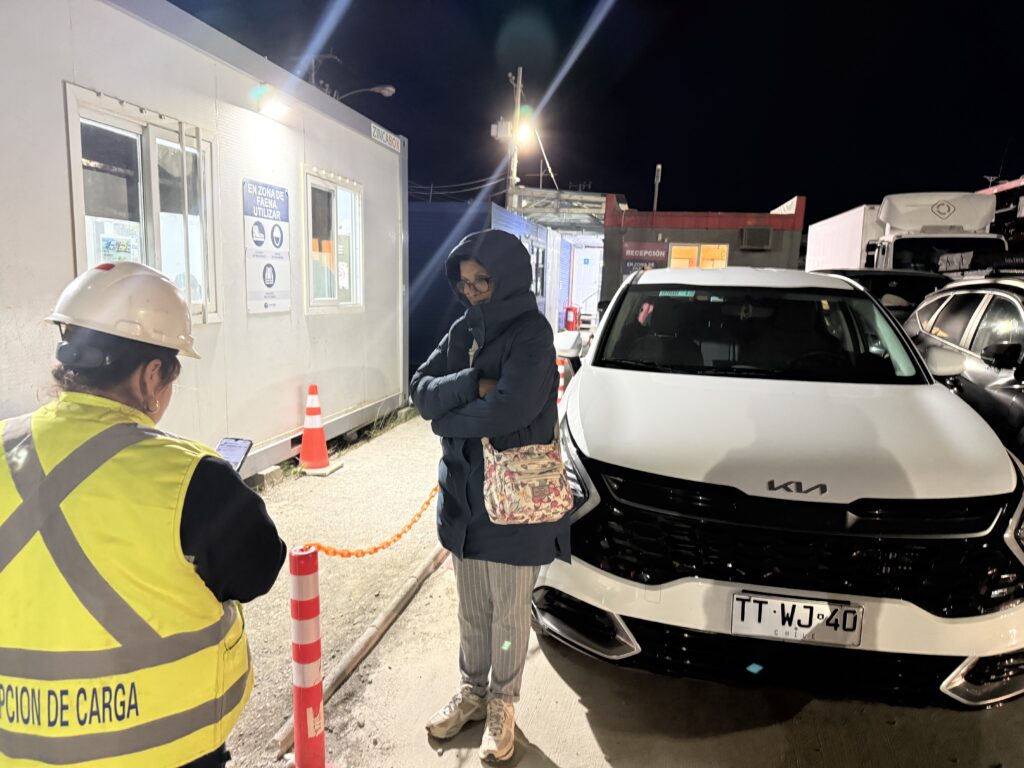
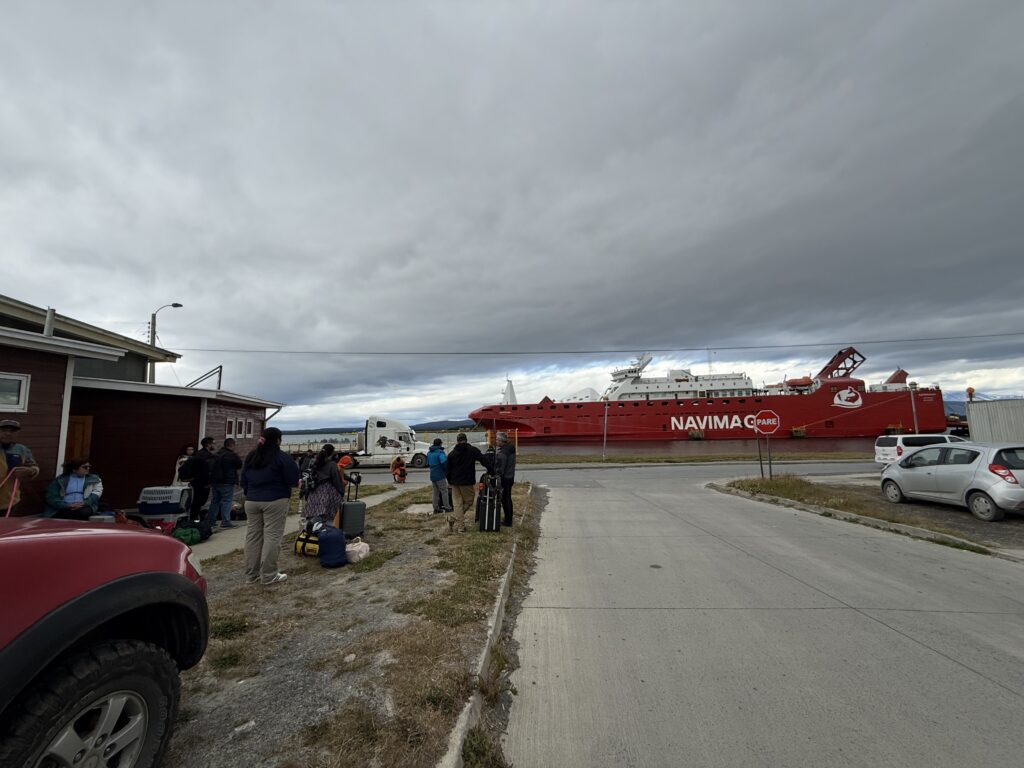
The Navimag EPA yard, where we were expected to check in the vehicle was a huge receiving yard for all vehicles which would be transported by the ferry. A large percentage of the traffic were huge commercial trucks and tankers carrying a variety of goods. The remaining were cars, campers and motorbikes and more esoteric vehicles, including a converted minibus of a South Korean who was also driving around the world!
The EPA Yard
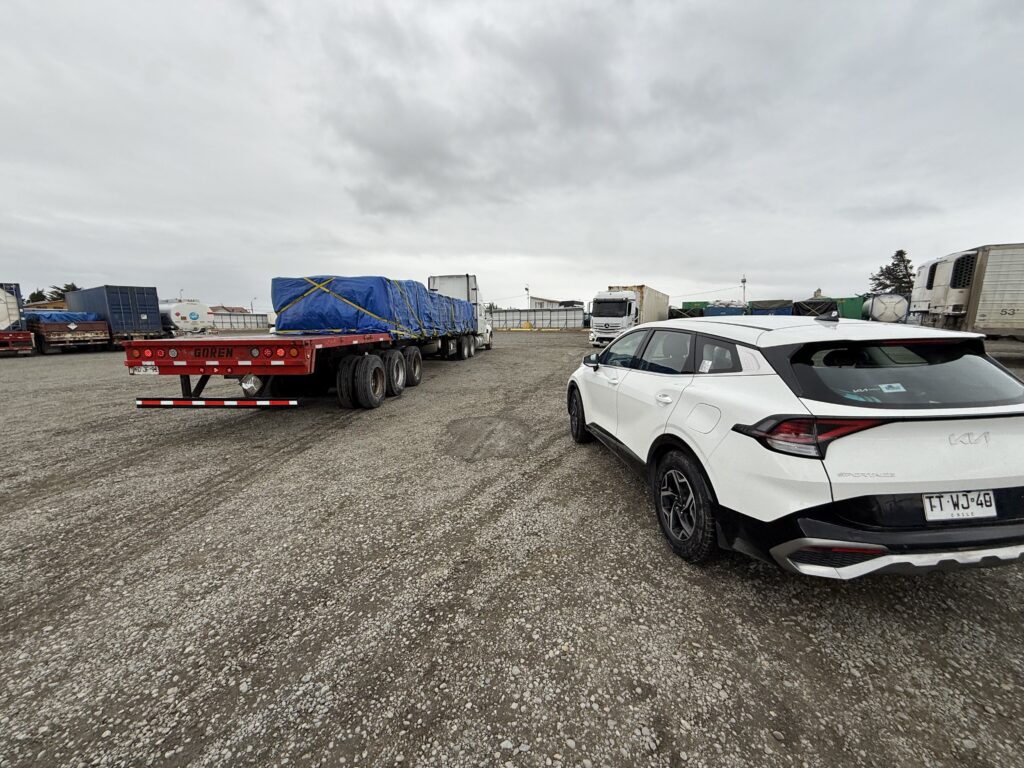
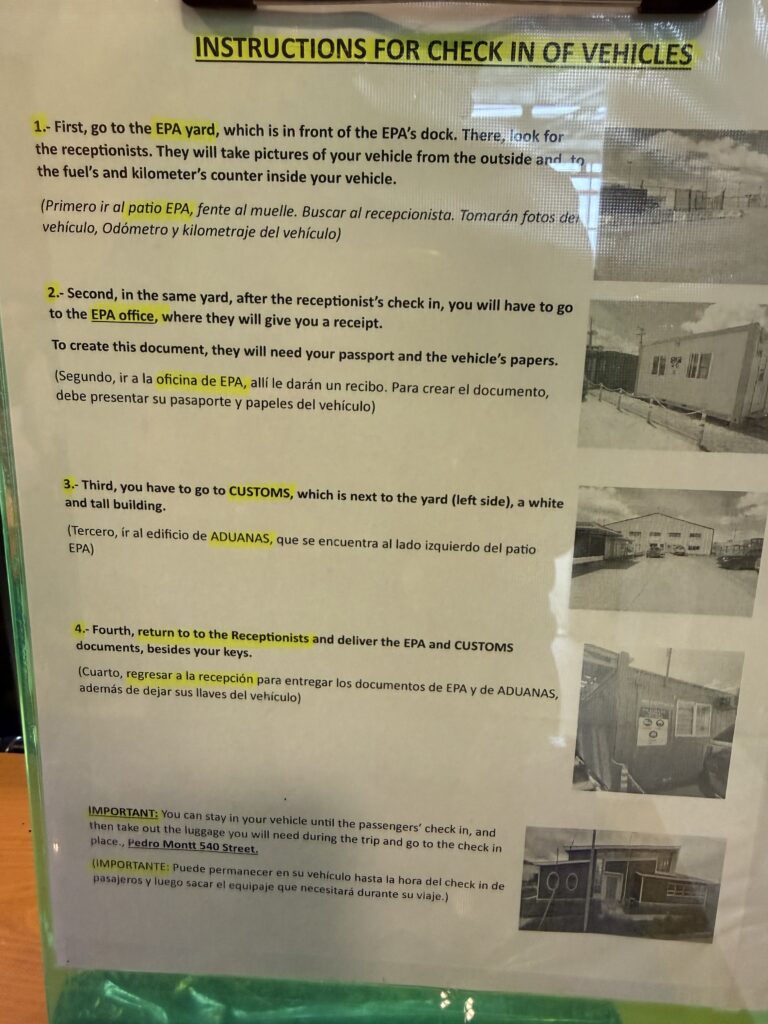
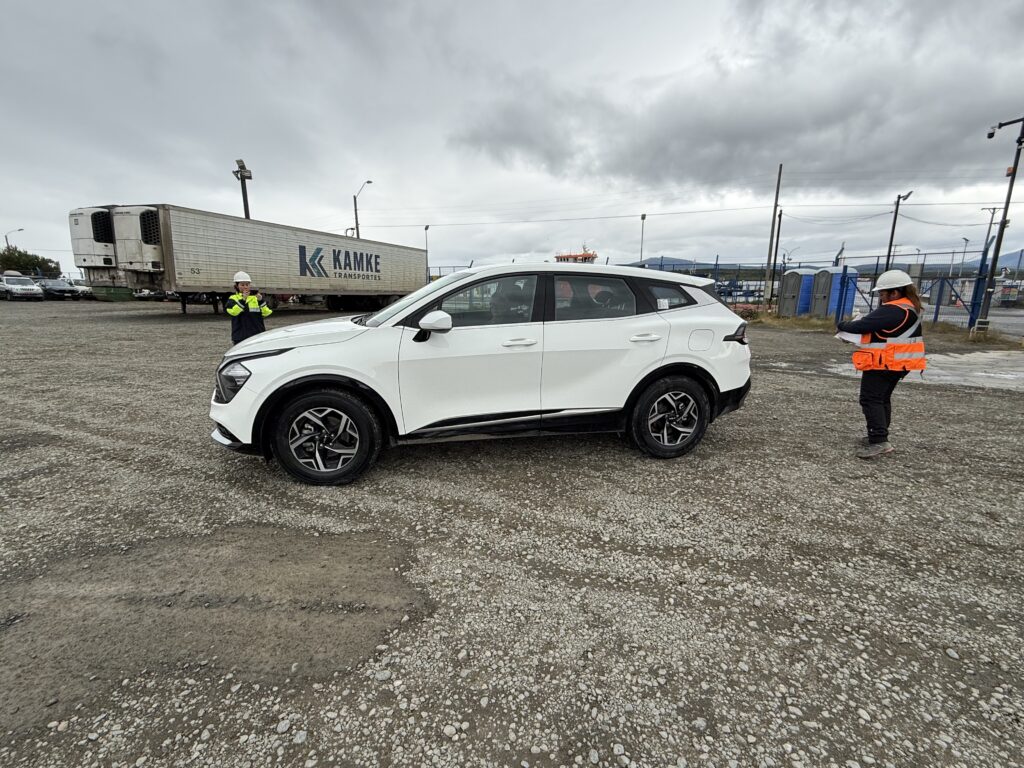
In the yard two receptionists, directed us to a spot and first asked for a form in to be completed. With the help of Google translate and with help from another passenger, the form ( comprising car and passport details) was duly completed. Then they proceeded to thoroughly check and photograph the car and also measure its dimensions. All vehicles including the large tankers underwent the same thorough rigorous check.
Once that was completed, they checked the fuel gauge. “You need more fuel”, one of them google translated. The fuel indicator indicated enough fuel for about 100 km and I was not sure of the rationale for filling up the tank further when we were just about to embark on a ferry.
“There was a fuel station nearby”, they indicated, pointing down the road. We drove to the Aramco station and filled up the tank to three quarters full.
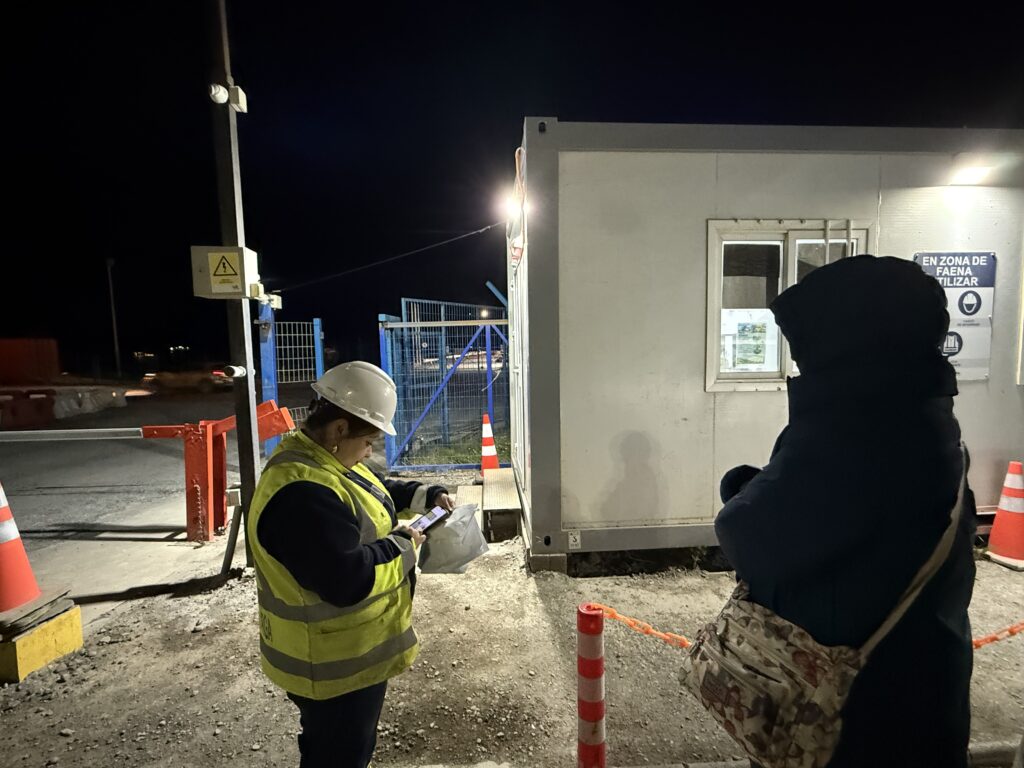
Once back, they rechecked, photographed the mileage and gave a completed form which had to be taken to another counter, where another form was generated with further car registration and rental details. This form had now to be taken to the customs office next door, where another form had to be filled along with a customs declaration. This took another 45 minutes. The customs form was then brought back to the reception. Once all forms were checked and found satisfactory, we were given a large white card with my name and car registration details. The white card had to be displayed behind the windscreen on the dashboard. We were also given an envelope for the car keys. We were now free to do what we wanted till 7 pm. At 7 we had to return and give the car keys. Embarkation was scheduled between 8.30 and 9.30 pm.
When we returned at 7 the Esperanza had still not arrived. “It is coming at 8 pm” was the answer. Large transport lorries and tankers were still coming into the yard to be processed for embarkation.
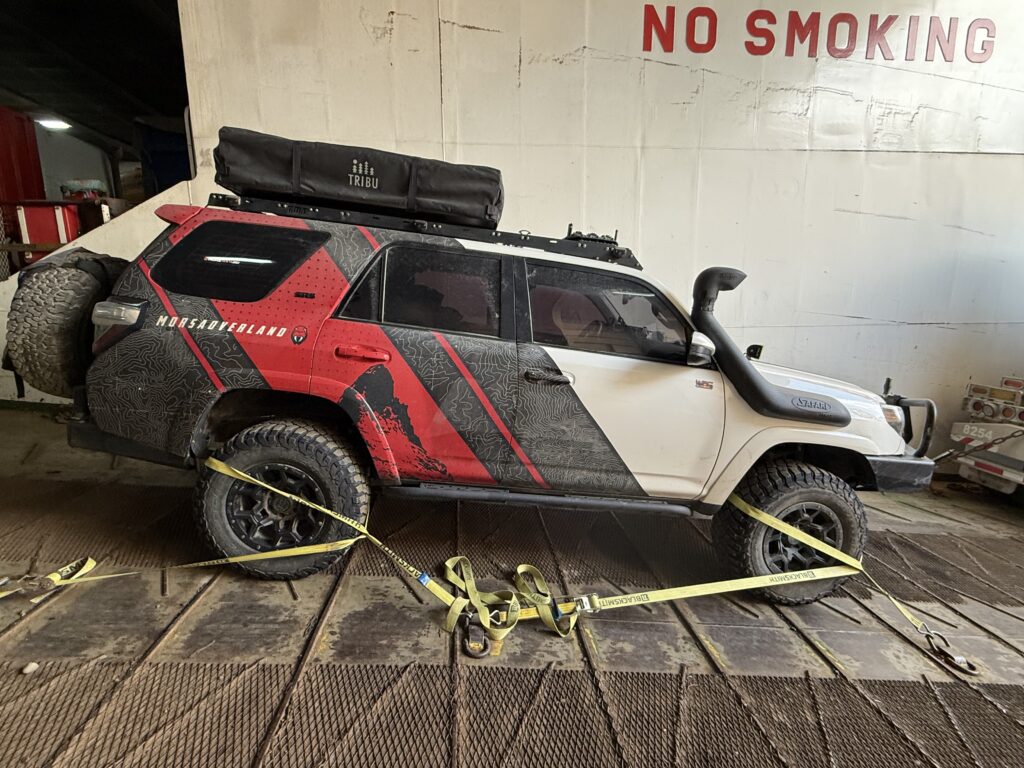
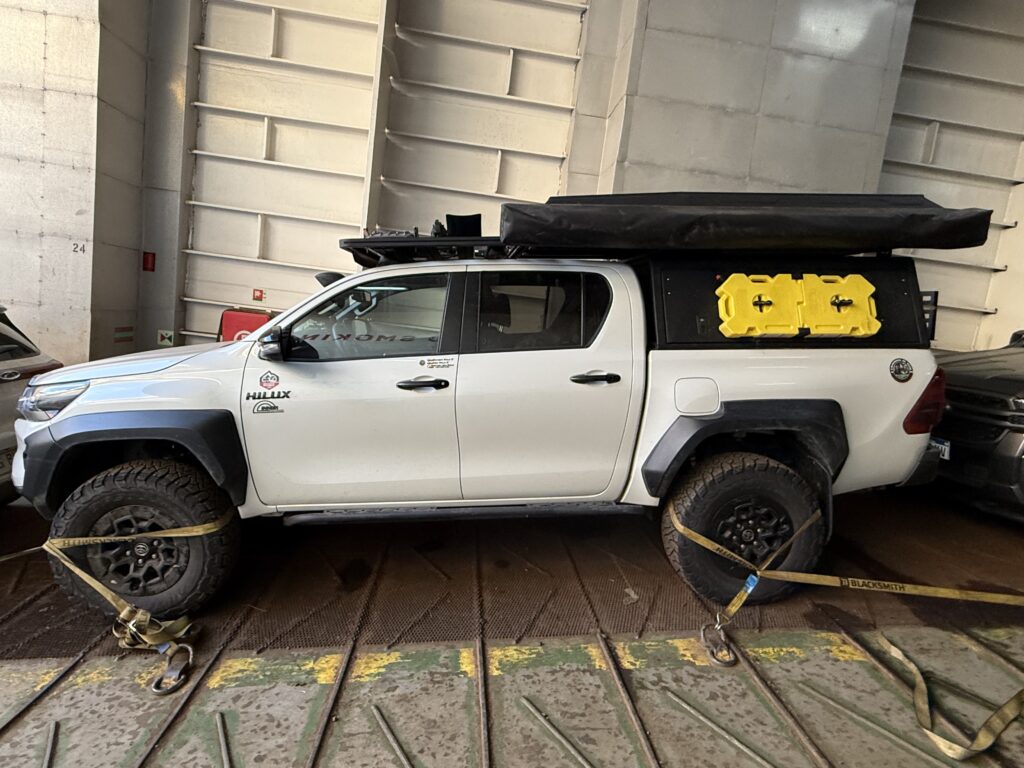
Alongside us as a family with three young kids in a camper-van. There were also a couple of extremely sophisticated modified Toyota off-road, expeditionary, vehicles with spare tyres and interesting equipment, including a shower cubicle on top.
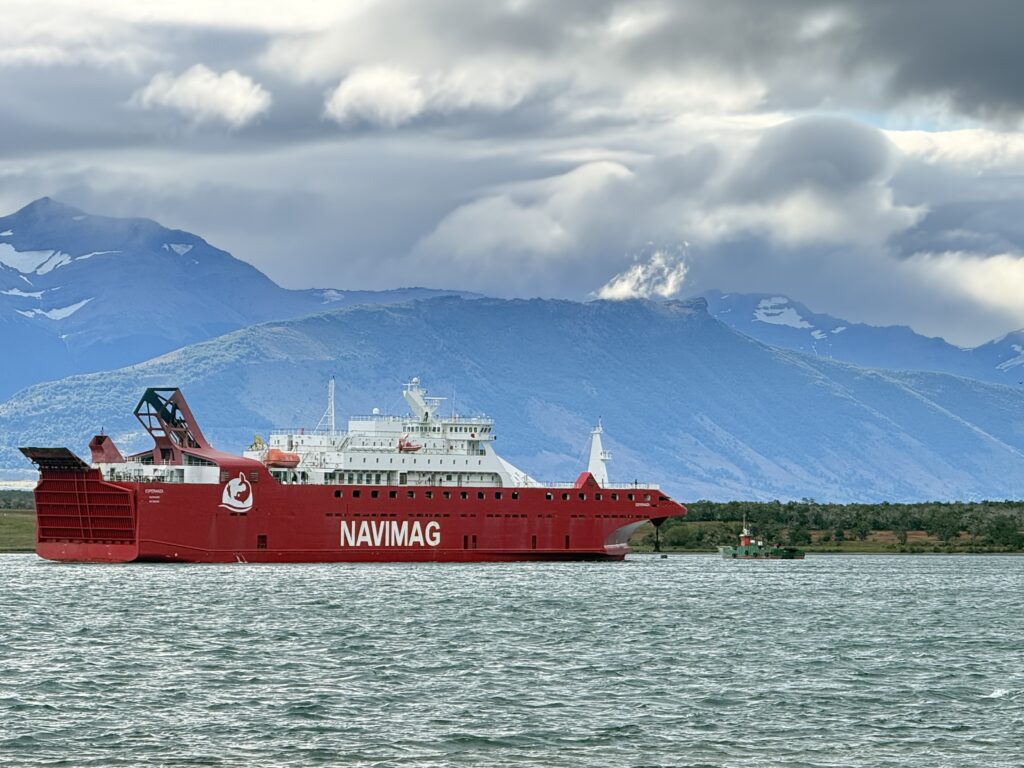
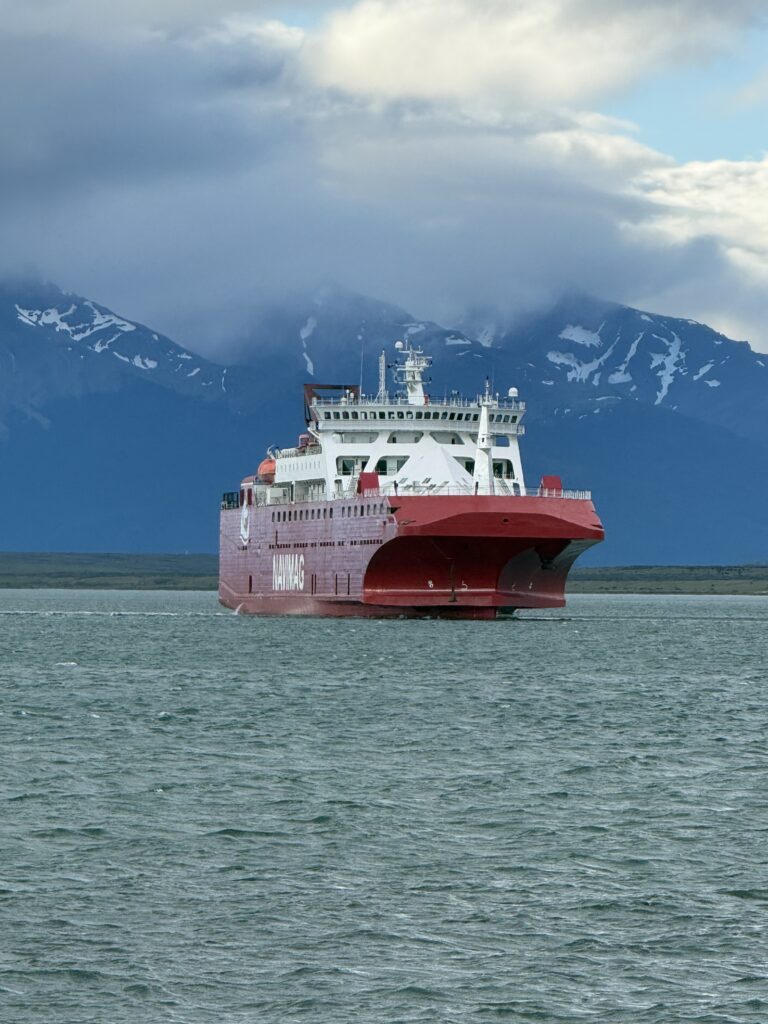
Around 7.30, the Esperanza came slowly into view. It was a huge roll on roll off ferry with a very interesting shape. It slowly passed the pier in front of the yard where it was due to dock and went off into the distance then turned and sailed back, and turned again. It did this about three times. “It is too windy for the captain to safely dock” we were informed!
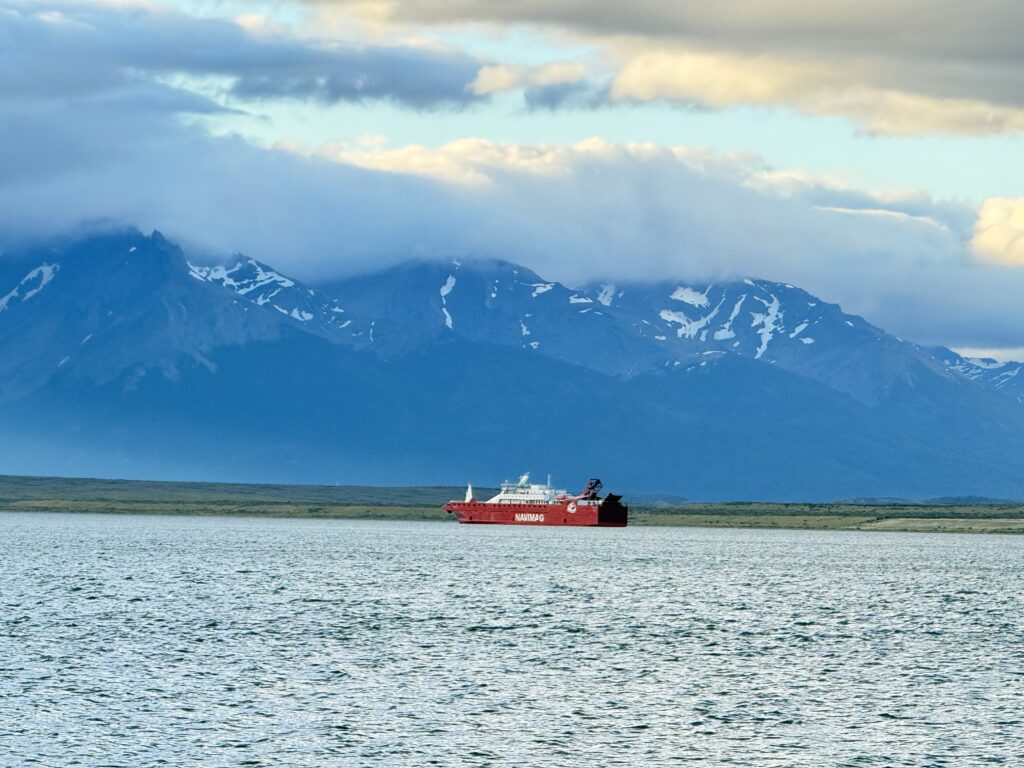
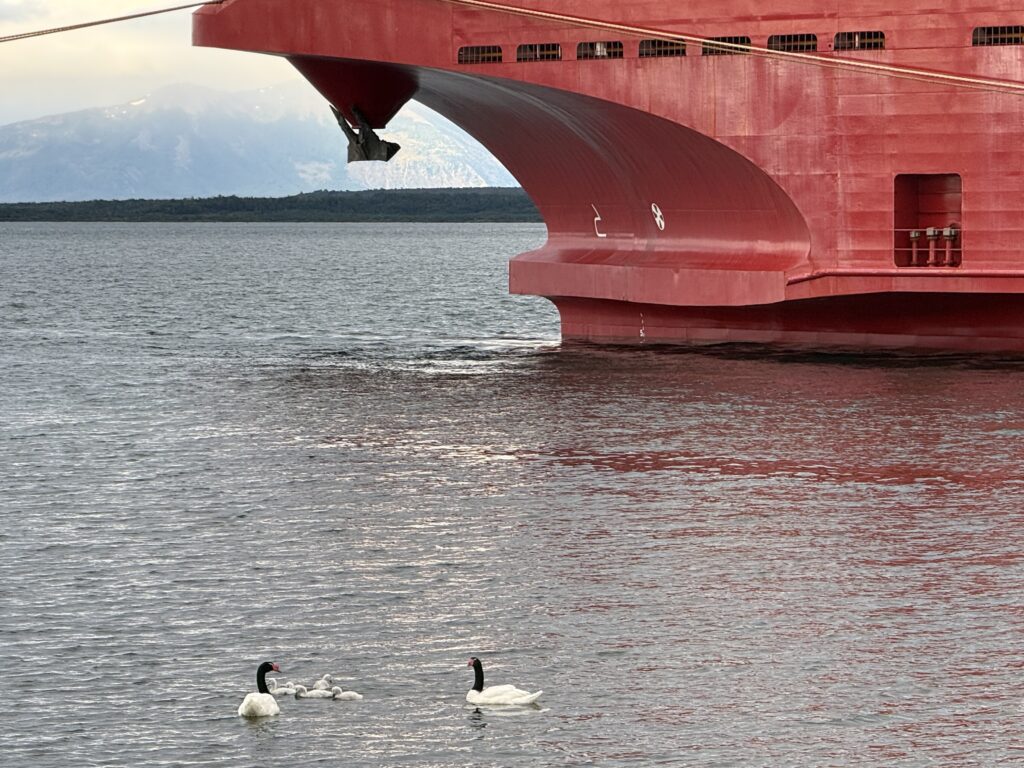
After the third attempt the Esperanza sailed further up the waterway towards Puerto Bories, where our hotel was, and dropped anchor. On enquiry we were told: “It is waiting for some more time till the wind settles down”.
Communication then went very quiet, without any announcements or messages! Just before midnight, the three guys from the Toyota Expedition went out to the Navimag Passenger Embarkation, building and came back and informed every one waiting that there is not going to be any embarkation tonight as the Esperanza would not be docking till next morning!
However no one could stay in their vehicles overnight, and had to leave the yard and find accommodation for the night in hotels. This was quite unexpected! Finding a room at midnight was going to be difficult. Everyone waiting to board started ringing around for rooms and leaving by taxis once rooms were confirmed.
We were unsuccessful with our attempts. One of receptionists also helped ringing around for a room for us without any luck.
In desperation, Jorge’s conversation in the morning when we checked out came to mind.. “Any problems… give me a call”…
A sleepy Jorge answered our call and we explained our predicament. “Come over immediately, I will have a room for you” he said without any hesitation.
The receptionist got us a taxi to Puerto Bories and the hotel. We got back to the HD hotel around one am and Jorge was waiting for us. He came out helped us with our luggage and into our room on ground floor.
“That is terrible”, he said. “Rest tonight, and I will check for you before you leave tomorrow whether Esperanza has docked!”
Dead tired but thankful for a warm room and comfortable beds, we settled for the night. Just before sleeping, there was a further email from Navimag, stating that embarkation had now been scheduled for 9:45 am the next day.
“Did you sleep well?” Jorge asked the next morning! I have checked and the Esperanza docked sometime this morning. Take your time. Have some breakfast and I’ll get you a taxi.”
I asked Jorge for the invoice for the night. “No payment required… it is on the house he said with a smile. And as I said, if you do come back again, give me a call”
He was firm when we insisted on paying…” No not at all.. this is the least I can do for you! He saw us off with a smile and wave on in a taxi with his final words…”If you ever come back yet again, and are in Santiago, get in touch ..”
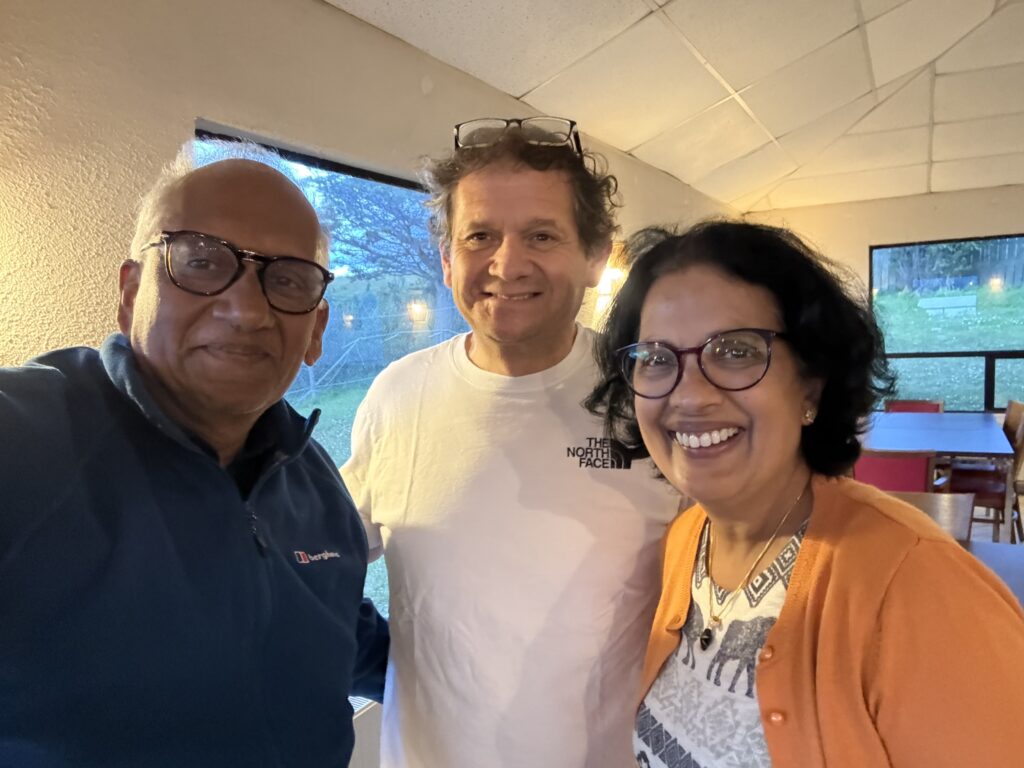
The taxi dropped us at the passenger embarkation building close to the EPA yard, where, sleepy bleary eyed passengers were gathering for the second attempt at boarding.
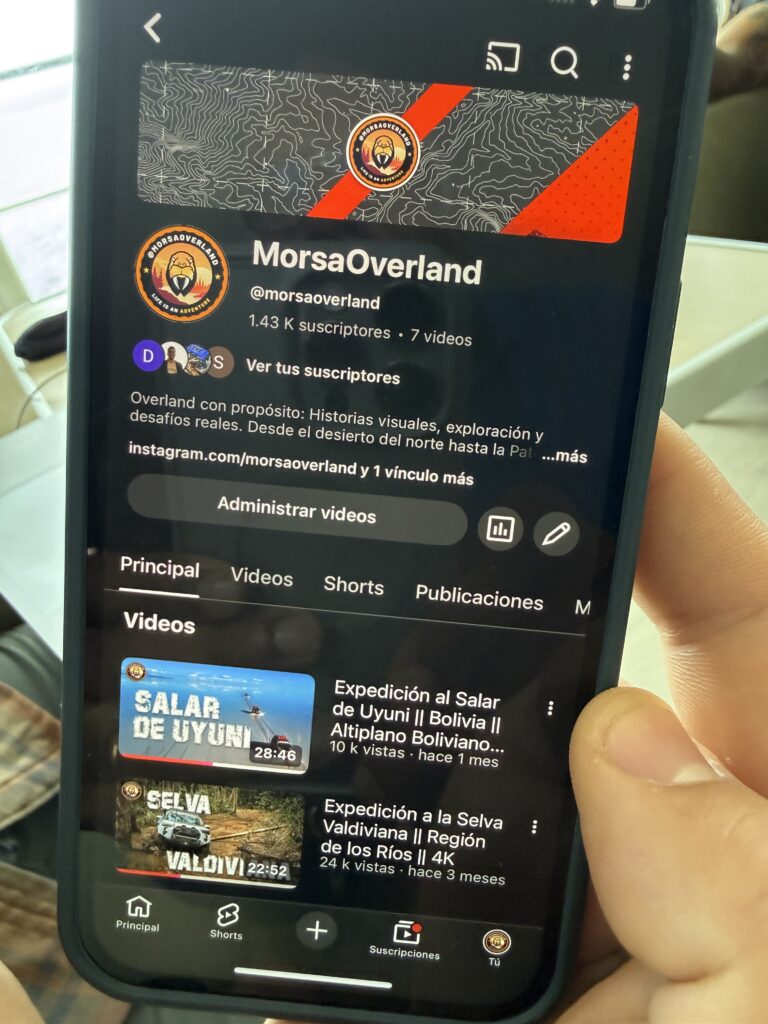
One of the three chaps Alex Chekspir with the Toyota Hilux, also came along and asked if we had got a room. They had found a room close by in a hotel. Alex Chekspir is an IT professional, whose hobby and passion is off road adventure. He has been doing this for several years and has YouTube and instagram channels, documenting his adventures (MorsaOverland). The other two are Anthony and Tony Avila, father and son, who are friends of Alex and also on the Carretera Adventure. Their adventures are photographed and filmed and made available on his subscription channel.
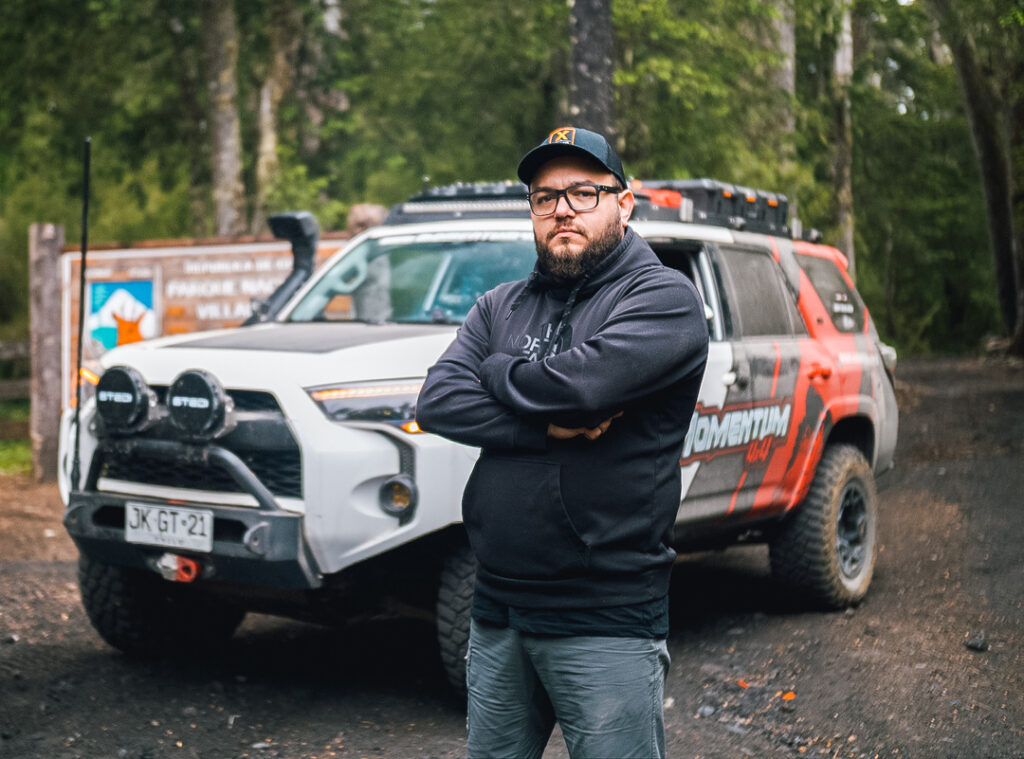
I was curious about their vehicles. They were both Toyotas, a Hilux and Forerunner which had been modified in a bespoke fashion for off road driving. They were from Santiago and were driving the Carretera and Patagonia for a month, but taking off road routed over 50% of the time and documenting the adventure. They were fully self sufficient with additional fuel, cooking facilities and also a pump and heater for hot water and for showers. They also had solar panels and portable Starlink internet. He wanted to know where we were from and what our route was.
The three of them were originally from Venezuela, but had not been back for over 10 years. I mentioned about Maduro who was on the news that morning. “Yes we have been following the news and we are very happy with it!”
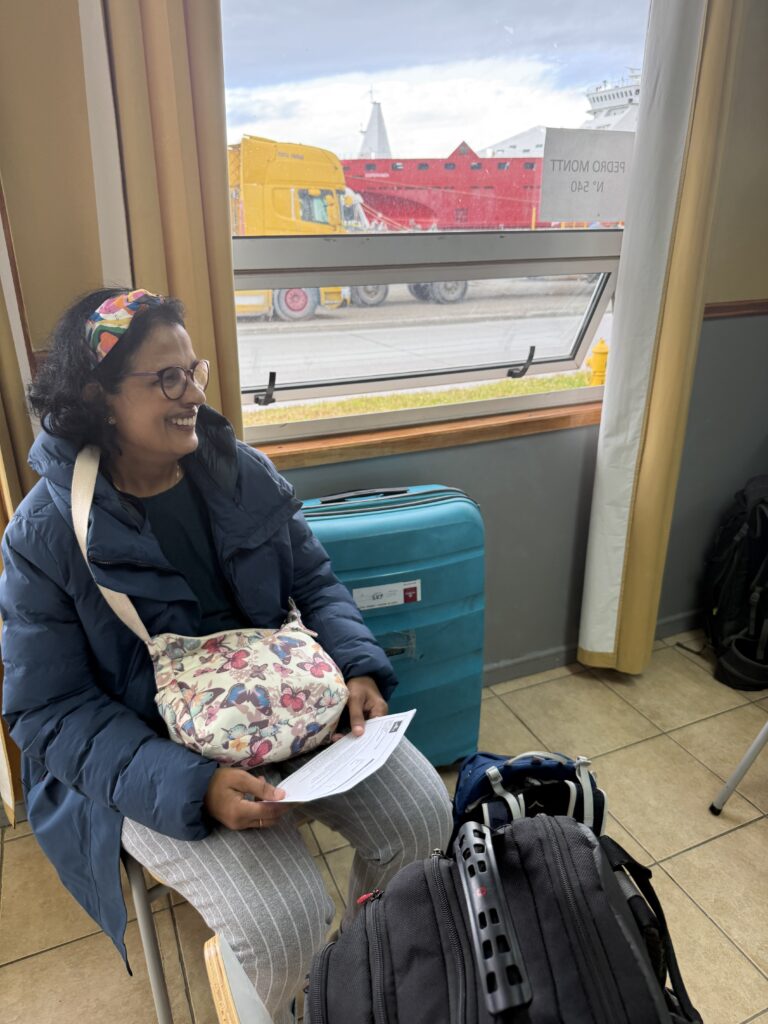
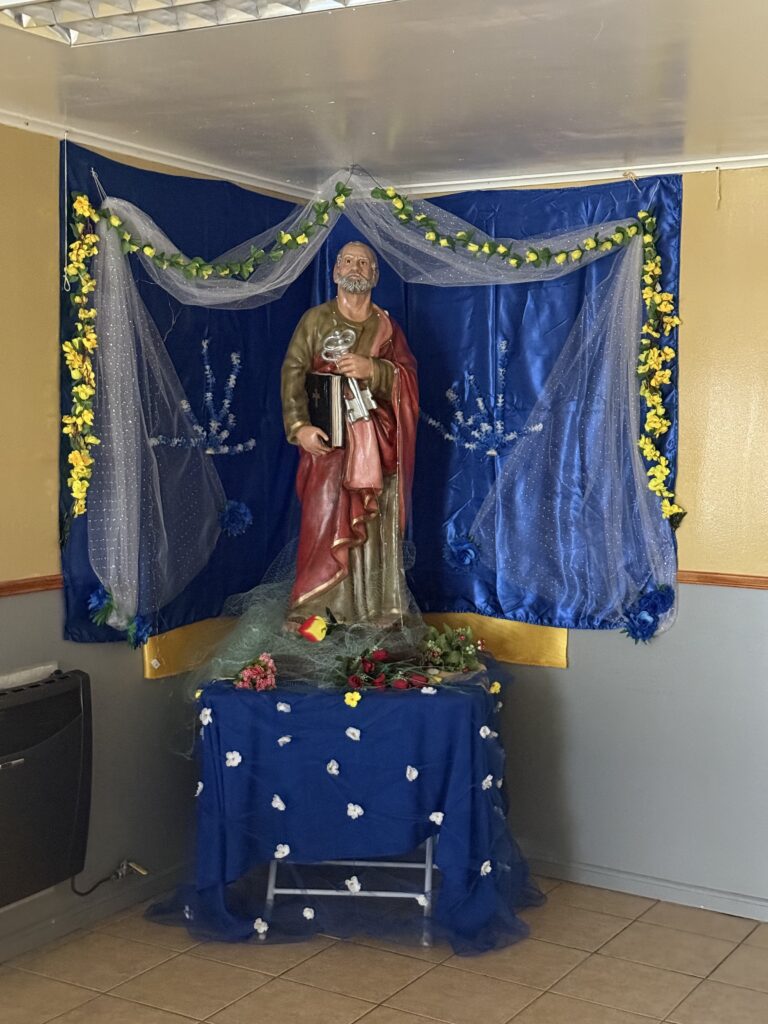
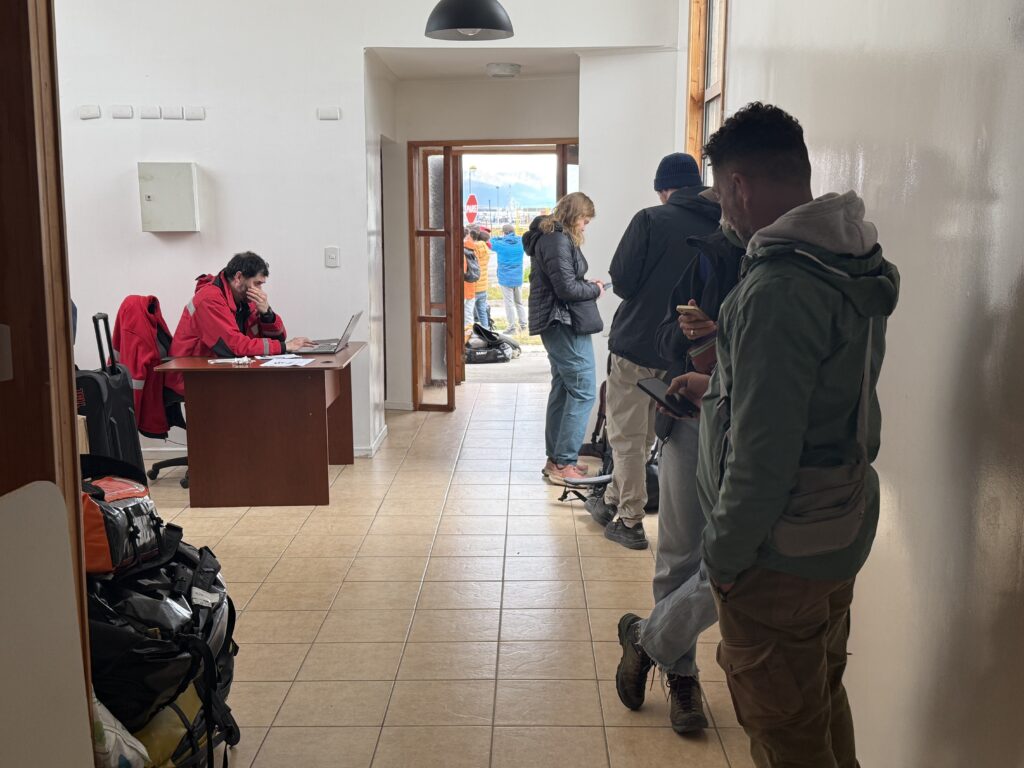
The passenger embarkation building was an interesting building, with a shrine to Saint Peter in one corner of the waiting room and a small kitchenette for making coffee, and chairs all around where passengers were waiting.
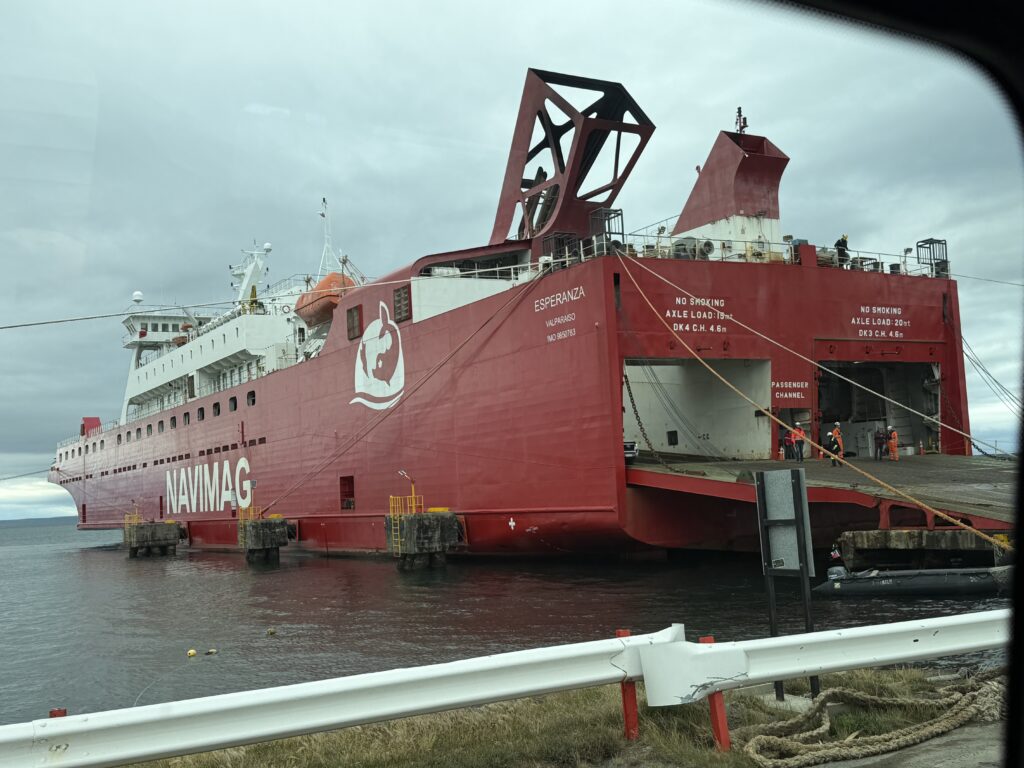
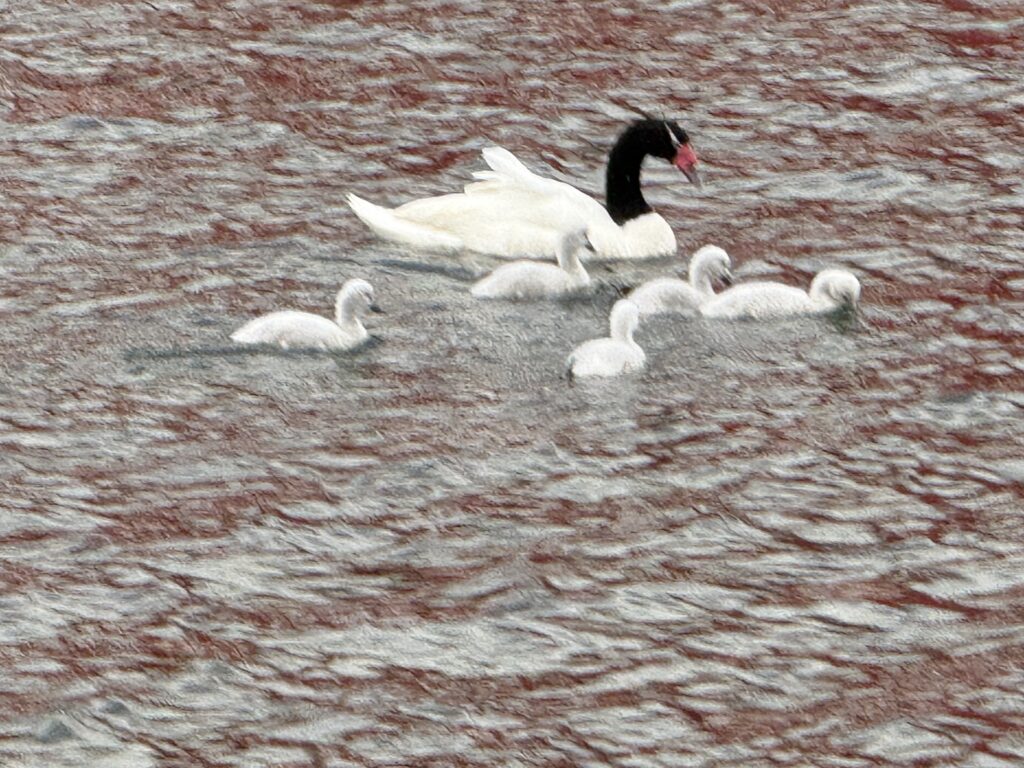
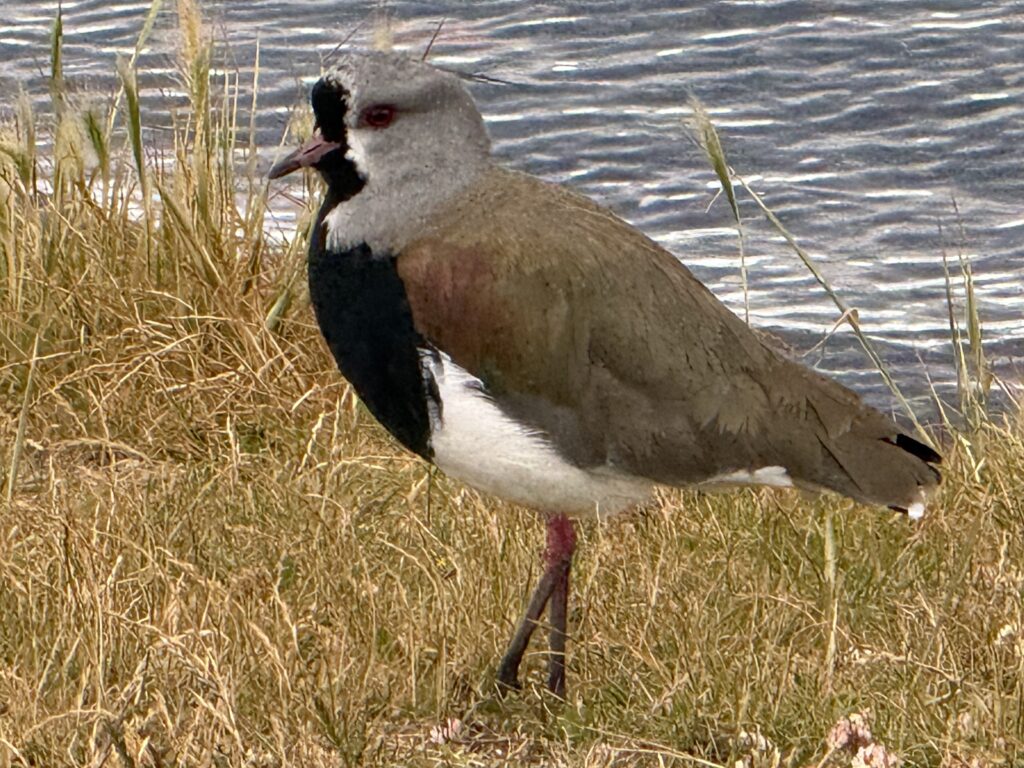
Boarding commenced after 9.30. The waiting passengers were transported in 4 small buses to the ferry. There was a long flight of stairs up about 3 stories to the main deck. Once on the main deck everyone was directed to their cabins and bunks.
Our cabin was on the port (left) side of the ferry. There were 4 bunks, and just the two of us, which was convenient and very comfortable.
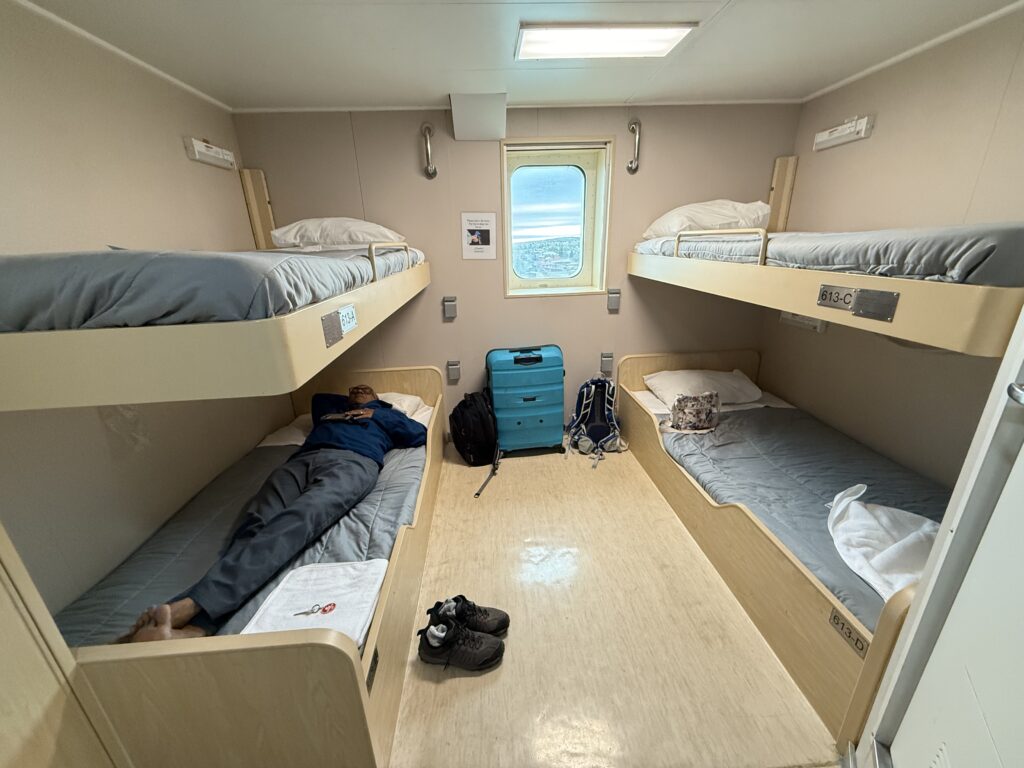
Once all passengers had checked in there was a tannoy announcement that the Captain would be speaking to everyone in the dining hall at 12 noon followed by a safety video and it was mandatory for everyone to attend.
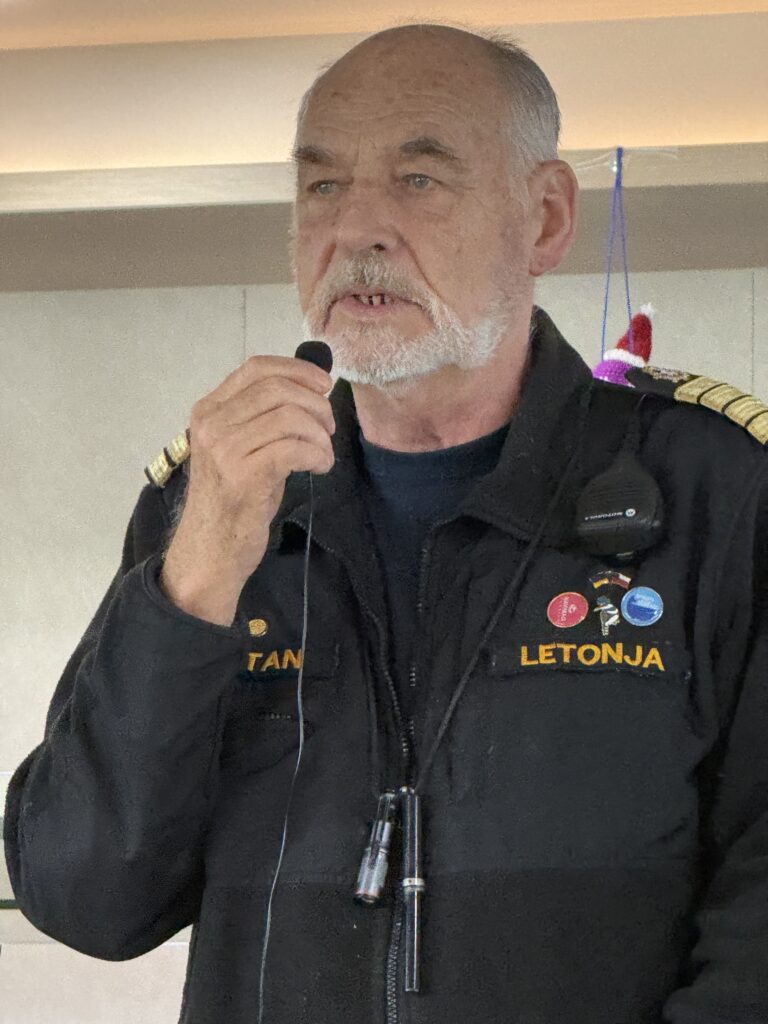
Captain Leonidas of the Esperanza a grizzled seafarer with a deadpan expression and with tongue in cheek humour. He welcomed everyone on board and said, We will leave at 1pm. “This journey will take three days. The first day you will get used to the ship, the second day you will get seasick and the third day will be spent recovering from sea sickness.”There was some laughter to which he retorted: : “It is not a joke”!
If you have come expecting a punctual , you have come to the wrong place as we are entirely dependant on the weather. This is an opportunity for you to relax, unwind, and enjoy unadulterated Patagonia. I would recommend you to shut off your Wifi and enjoy nature in all it’s glory!
Lunch was served after the Captain’s address and the safety video. The meals served during the three days were wholesome tasty nutritious meals, at breakfast (8-9am) lunch (12 -1) and dinner (7-8). Coffee and fruit juice were available 24/7.
After lunch, there was still no sign of the Esperanza, leaving. At 2pm the Tannoy blared” Could all passengers come to the dining hall for the captain to make an announcement”.
Captain Leonidas took the microphone. “We cannot sail today”. The wind is too strong. “We have to postpone sailing to tomorrow”. There were murmurings. ” I cannot confirm when exactly we can depart, as it is entirely dependant on the weather. Once we leave, also there may be delays on the way, depending on the weather. If anyone has important schedules, you are free to leave the ship in the next hour. After that there are no further opportunities to leave. You are prisoners on my ship”.
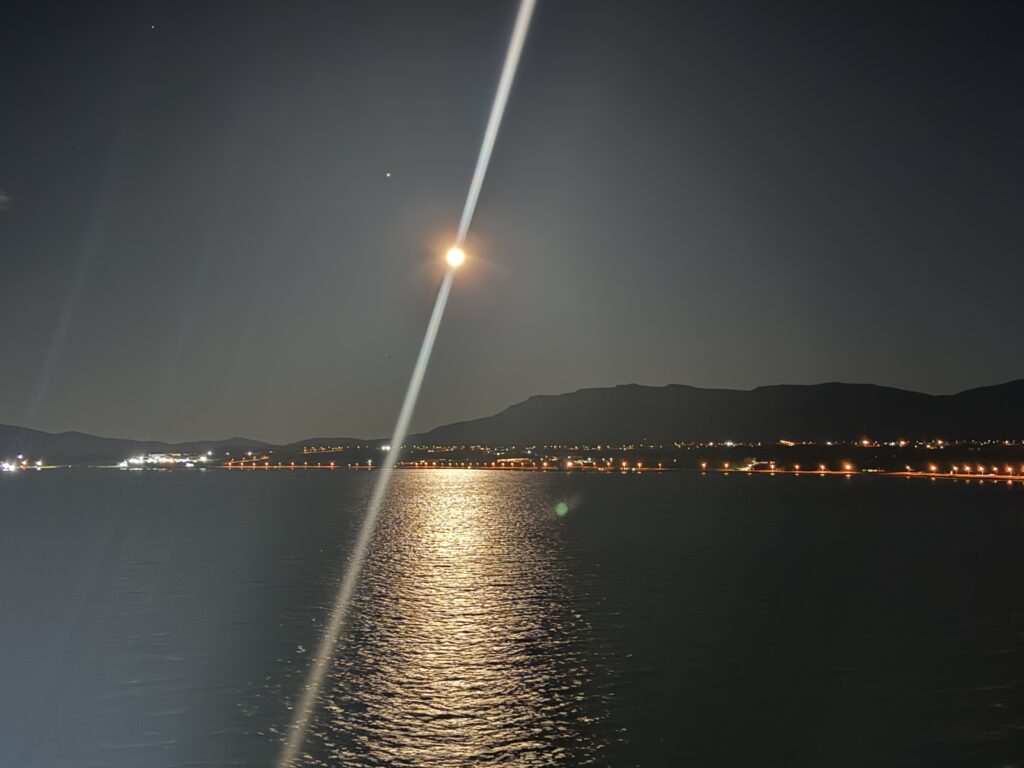
The Esperanza finally sailed just after midnight, in the early hours of the morning of the 3rd of January!
Navimag does mention on its website “The ferry could be delayed due to harsh weather conditions or port operational reasons beyond our responsibility”. An AI search also indicates: “Navimag ferry delays are common, primarily due to Patagonia’s unpredictable weather and sea conditions, often resulting in 1-2 day delays or cancellations, especially at the start/end of the October-March season, so building flexibility (Plan B) into your travel plans is crucial as delays can impact onward travel!”
Leave a Reply